Love this? Save it for later!
Share the inspiration with your friends
“Can you make that chicken again? The one with the honey stuff?” My six-year-old asked this on a random Tuesday, fork hovering over a pile of roasted carrots. And I had no idea what she meant. Honey stuff? I’ve made a lot of chicken. But she kept describing it—”the one with the orange color and the sweet part”—until it clicked. That chicken I threw together last October when the farmer’s market had those perfect rainbow carrots and I was too tired to stand over a stove.
That was the first time I made this Easy One-Pan Honey Mustard Chicken and Fall Vegetables. And honestly? I almost forgot about it. It was one of those dinners you make in a blur, hoping everyone eats it without complaint. But my daughter remembered. She remembered the way the honey caramelized on the chicken thighs, the way the mustard gave everything a little bite, the way the vegetables soaked up all that pan juice like little sponges.
So I made it again. And again. And somewhere between the third and fourth time, I stopped calling it “that chicken” and started calling it our fall staple. This recipe isn’t fancy. It’s not complicated. But it’s the kind of meal that makes you wonder why you ever bother with anything else on a busy weeknight. One pan, a handful of ingredients, and forty minutes later, you’ve got dinner that tastes like you tried way harder than you actually did.
Why You’ll Love This Recipe
I’ve tested this Easy One-Pan Honey Mustard Chicken and Fall Vegetables at least a dozen times now, tweaking the honey-to-mustard ratio, adjusting the roast time, swapping in different vegetables depending on what looked good at the store. And every single time, it works. That’s the kind of recipe you need in your back pocket.
- One Pan, Zero Fuss : Everything cooks together on a single sheet pan—chicken, vegetables, the whole deal. You prep, you roast, you eat. Minimal dishes, maximum flavor.
- Simple Ingredients : No weird specialty items. You probably have honey and mustard in your fridge right now. The vegetables are whatever looks good at the market or whatever’s left in your crisper drawer.
- Perfect for Busy Weeknights : From start to finish, you’re looking at about 45 minutes. Most of that is hands-off oven time while you unload the dishwasher or help with homework.
- Fall Comfort Food That’s Actually Good for You : This isn’t heavy or greasy. It’s warm and satisfying without putting you in a food coma. The vegetables roast up sweet and tender, the chicken stays juicy, and that honey mustard glaze? It’s everything.
- Crowd-Pleaser : I’ve served this to picky kids, skeptical in-laws, and friends who “don’t really like mustard.” Everyone cleans their plate. Every single time.
What makes this recipe different from every other sheet pan chicken out there is the glaze. Most recipes use a thin marinade that burns off in the oven. Not this one. The honey and mustard create this sticky, caramelized coating that clings to the chicken skin and drips down onto the vegetables below. It’s not just seasoned—it’s transformed. And that’s the kind of dinner magic we all need more of.
What Ingredients You Will Need
This recipe uses simple, wholesome ingredients that come together to create something genuinely special. No fancy trips to specialty stores required. Here’s what you’ll need:
For the Chicken
- 4 bone-in, skin-on chicken thighs (about 1.5 pounds) — The bone keeps the meat juicy during roasting, and the skin gets beautifully crispy under that honey mustard glaze. You can use boneless thighs if you prefer, just reduce the cooking time by about 10 minutes.
- 1 tablespoon olive oil — Helps the seasoning stick and encourages browning.
- 1 teaspoon salt — I use kosher salt for better control. Diamond Crystal is my go-to.
- 1/2 teaspoon black pepper — Freshly ground makes a difference here.
- 1/2 teaspoon garlic powder — Adds savory depth without burning like fresh garlic would at high heat.
For the Fall Vegetables
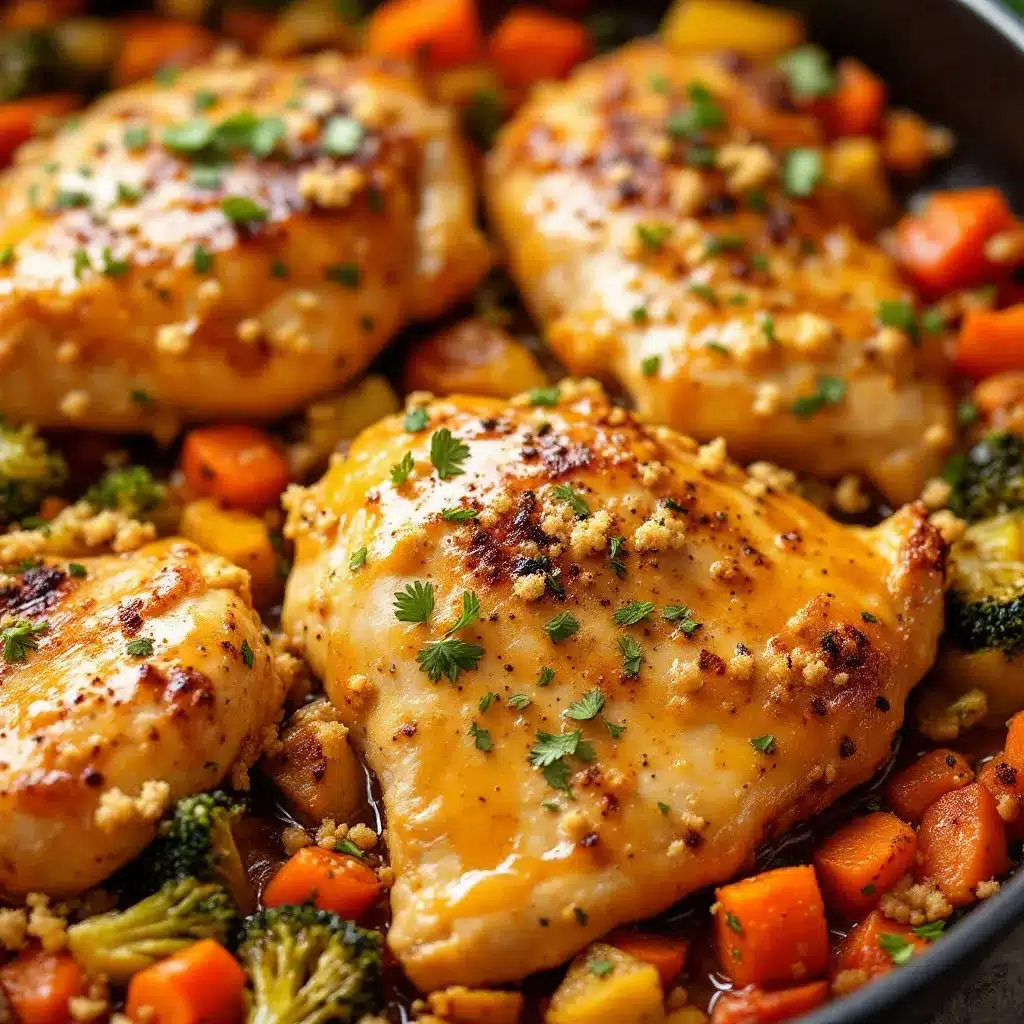
- 2 cups butternut squash, peeled and cut into 1-inch cubes — Gets sweet and almost caramelized in the oven. Look for squash that feels heavy for its size with no soft spots.
- 2 cups Brussels sprouts, trimmed and halved — The edges get crispy and the insides stay tender. If you’re not a Brussels sprouts fan, try this anyway—the honey mustard transforms them.
- 1 large red onion, cut into 1-inch chunks — Adds sweetness and color as it roasts.
- 2 large carrots, peeled and cut into 1-inch pieces — Rainbow carrots are gorgeous here if you can find them.
- 2 tablespoons olive oil — For coating the vegetables before roasting.
- 1/2 teaspoon salt
- 1/4 teaspoon black pepper
- 1/4 teaspoon smoked paprika (optional but recommended) — Adds a subtle smokiness that pairs beautifully with the honey mustard.
For the Honey Mustard Glaze
- 1/4 cup honey — Use a mild honey like clover or orange blossom. Strong varietals like buckwheat can overpower the mustard.
- 3 tablespoons Dijon mustard — I prefer Grey Poupon for its smooth texture and balanced heat. Avoid yellow mustard here—it’s too sharp and doesn’t coat as well.
- 1 tablespoon whole grain mustard — Adds texture and little pops of mustard seed. If you don’t have it, use all Dijon.
- 2 tablespoons apple cider vinegar — Cuts through the sweetness and keeps the glaze from being cloying.
- 2 cloves garlic, minced — Adds a savory backbone.
- 1 tablespoon olive oil
- 1/2 teaspoon dried thyme — Earthy and warm, perfect for fall. Fresh thyme works too—use 1 teaspoon of leaves.
For Garnish (Optional)
- Fresh parsley or thyme, chopped — For color and freshness at the end.
- Flaky sea salt — A sprinkle right before serving makes everything pop.
Equipment Needed
One of the best things about this recipe is how little equipment it requires. Here’s what you’ll need:
- Large sheet pan (half-sheet size, about 18×13 inches) — A rimmed baking sheet is important here to catch all those delicious juices. My favorite is the Nordic Ware aluminum half-sheet pan. It’s affordable, heats evenly, and doesn’t warp.
- Parchment paper or aluminum foil — Not strictly necessary, but makes cleanup even easier. If you use foil, lightly spray it with cooking spray to prevent sticking.
- Mixing bowls — One medium bowl for the vegetables, one small bowl for the glaze.
- Chef’s knife and cutting board — For prepping the vegetables. A sharp knife makes squash prep much less intimidating.
- Measuring spoons and liquid measuring cup
- Tongs — For turning the chicken and vegetables halfway through roasting.
- Instant-read thermometer (optional but recommended) — Takes the guesswork out of knowing when the chicken is done. I use a Thermapen and it’s worth every penny.
If you don’t have a sheet pan large enough, you can use two smaller pans. Just rotate them between the racks halfway through cooking. And if you’re using a dark nonstick pan, keep an eye on things—dark pans absorb more heat and can cause faster browning.
Preparation Method
Let me walk you through this step by step. I’ve made this recipe enough times to know exactly where things can go wrong and how to fix them before they do.
Step 1: Preheat and Prep
Preheat your oven to 425°F (220°C). Position a rack in the center of the oven. While the oven heats, line your sheet pan with parchment paper if you’re using it. This isn’t required, but I promise you’ll thank yourself at cleanup time.
Step 2: Make the Honey Mustard Glaze
In a small bowl, whisk together 1/4 cup honey, 3 tablespoons Dijon mustard, 1 tablespoon whole grain mustard, 2 tablespoons apple cider vinegar, 2 minced garlic cloves, 1 tablespoon olive oil, and 1/2 teaspoon dried thyme. Whisk until smooth. Taste it. It should be sweet with a sharp mustard kick and a little tang from the vinegar. If it tastes too sweet, add another teaspoon of mustard. Too sharp? A drizzle more honey. Set aside about 2 tablespoons of this glaze for brushing on at the end.
Step 3: Season the Chicken
Pat the chicken thighs dry with paper towels. This is important—dry skin gets crispy skin. Place them in a bowl and drizzle with 1 tablespoon olive oil. Sprinkle with 1 teaspoon salt, 1/2 teaspoon black pepper, and 1/2 teaspoon garlic powder. Toss to coat. Don’t skip the patting dry step. I learned this the hard way after making soggy-skinned chicken for years.
Step 4: Prep the Vegetables
In a large bowl, combine the cubed butternut squash, halved Brussels sprouts, red onion chunks, and carrot pieces. Drizzle with 2 tablespoons olive oil and sprinkle with 1/2 teaspoon salt, 1/4 teaspoon black pepper, and 1/4 teaspoon smoked paprika if using. Toss everything together until evenly coated. The vegetables should look glossy but not greasy.
Step 5: Arrange on the Sheet Pan
Spread the vegetables in a single layer on your prepared sheet pan. Leave space in the middle for the chicken. Nestle the chicken thighs skin-side up among the vegetables. Don’t crowd the pan—if everything is packed too tight, the vegetables will steam instead of roast. Use two pans if needed.
Step 6: Brush with Glaze
Using a pastry brush or the back of a spoon, brush about half of the remaining honey mustard glaze over the chicken thighs and drizzle a little over the vegetables. Reserve the rest for later.
Step 7: Roast
Place the sheet pan in the preheated oven and roast for 25 minutes. The kitchen will start smelling incredible around the 15-minute mark. After 25 minutes, remove the pan from the oven and use tongs to flip the vegetables (leave the chicken skin-side up). Brush the chicken with more glaze and return to the oven.
Step 8: Finish Roasting
Roast for another 15-20 minutes, until the chicken reaches an internal temperature of 165°F (74°C) at the thickest part (not touching the bone) and the vegetables are tender and caramelized. The Brussels sprouts should have crispy edges, the squash should be easily pierced with a fork, and the chicken skin should be golden brown and sticky with glaze.
Step 9: Rest and Serve
Remove the pan from the oven and let it rest for 5 minutes. This resting time lets the juices redistribute through the chicken. Brush with the reserved glaze (the one you set aside earlier) for a fresh hit of flavor. Sprinkle with fresh herbs and flaky sea salt if using. Serve directly from the pan for a casual dinner, or transfer to a platter for something a little more polished.
Cooking Tips & Techniques
After making this Easy One-Pan Honey Mustard Chicken and Fall Vegetables more times than I can count, I’ve picked up a few tricks that make a real difference.
Don’t skip drying the chicken skin. This is the number one mistake people make. Wet skin steams instead of crisping. Take the extra 30 seconds to pat those thighs dry with paper towels. Your future self will thank you when you bite into that perfectly crispy, caramelized skin.
Cut your vegetables to the same size. This matters more than you think. If your squash cubes are twice the size of your Brussels sprouts halves, one will be overcooked while the other is still crunchy. Aim for 1-inch pieces across the board. I use my knuckle as a rough guide—if it’s bigger than my thumb joint, it’s too big.
Give the vegetables space. I know it’s tempting to pile everything on one pan to save dishes, but crowding leads to steaming. If your pan looks full, use a second pan. The vegetables need room for hot air to circulate around them so they caramelize instead of turning into mushy steam-bath vegetables.
Rotate the pan halfway through. Every oven has hot spots. Rotating the pan front to back at the 25-minute mark ensures even cooking. If your oven runs hot like mine, you might want to check things a few minutes early the first time you make this.
Use an instant-read thermometer. I resisted buying one for years, thinking I could tell when chicken was done by sight. I was wrong. Chicken thighs are forgiving, but hitting exactly 165°F ensures they’re juicy and safe without being overcooked. The difference between 165°F and 175°F is the difference between “wow” and “meh.”
Broil for extra caramelization. If you want that restaurant-style sticky glaze, switch your oven to broil for the last 2-3 minutes of cooking. Watch it closely—things go from perfect to burnt very quickly under the broiler. I speak from experience.
Variations & Adaptations
One of the things I love about this recipe is how flexible it is. Here are some ways to switch things up:
Swap the protein. Chicken breasts work here, but reduce the cooking time by about 10 minutes and check for doneness earlier. Boneless chicken thighs cook faster too—start checking at 25 minutes total. I’ve also made this with bone-in chicken legs and it was fantastic.
Change the vegetables with the season. In spring, try asparagus and new potatoes. Summer calls for zucchini, bell peppers, and cherry tomatoes. Winter is perfect for parsnips, turnips, and sweet potatoes. Just keep in mind that different vegetables have different cooking times—dense root vegetables need more time than tender vegetables. Cut denser vegetables smaller so everything finishes at the same time.
Make it dairy-free. This recipe is naturally dairy-free as written. If you’re serving someone with dairy sensitivities, you don’t need to change a thing.
Try different mustards. Spicy brown mustard adds more heat. Honey mustard (the kind you buy at the store) can replace both the honey and Dijon in a pinch—just use 1/3 cup and reduce the honey to 2 tablespoons. I’ve even used a grainy beer mustard that a friend brought back from Germany, and it was incredible.
Add a little heat. If you like spicy food, add 1/4 teaspoon cayenne pepper to the glaze or a drizzle of sriracha. The heat cuts through the sweetness beautifully.
Go low-carb. Replace the butternut squash with cauliflower florets or additional Brussels sprouts. The cooking time stays about the same.
If you’re looking for another cozy meal that fills the house with amazing smells, you should try my classic chicken pot pie—it’s the kind of comfort food that makes a cold night feel warm again.
Serving & Storage Suggestions
This dish is best served straight from the oven while everything is still hot and the glaze is sticky and glossy. But here’s how to handle leftovers and make the most of every bite.
Serving temperature and presentation. Serve the chicken and vegetables on a warm platter or directly from the sheet pan if you’re keeping things casual. Drizzle any remaining pan juices over the top—that’s liquid gold right there. A sprinkle of fresh parsley or thyme adds color and freshness. For a complete meal, I love serving this with a simple green salad dressed with lemon vinaigrette or a side of crusty bread to soak up the pan juices.
What to serve with it. This dish is pretty complete on its own, but I often add a side of quinoa, farro, or rice to stretch it further. My fresh Waldorf salad makes a great starter—the crunch of apples and walnuts is a nice contrast to the tender roasted vegetables.
Storage instructions. Store leftovers in an airtight container in the refrigerator for up to 4 days. The flavors actually meld together overnight, so leftovers are almost better the next day. I’ve been known to make extra on purpose just for lunch the next day.
Reheating methods. The best way to reheat this is in the oven at 350°F for about 10 minutes, which brings back some of the crispiness. The microwave works in a pinch, but the chicken skin will lose its crunch. If you’re using the microwave, cover the plate with a damp paper towel to prevent the chicken from drying out.
Freezing instructions. This dish freezes surprisingly well. Let everything cool completely, then transfer to a freezer-safe container. It will keep for up to 3 months. Thaw overnight in the refrigerator and reheat in the oven at 350°F until warmed through. The vegetables will be softer after freezing, but the flavor is still excellent.
How flavors develop over time. The honey mustard glaze continues to penetrate the chicken and vegetables as they sit. Day-old leftovers have a deeper, more integrated flavor than the freshly made dish. It’s one of those rare recipes that rewards you for making it ahead.
Nutritional Information & Benefits
This Easy One-Pan Honey Mustard Chicken and Fall Vegetables isn’t just delicious—it’s packed with nutrients that make you feel good about eating it.
Estimated nutritional values per serving (based on 4 servings, including chicken and vegetables):
- Calories: 485
- Protein: 32g
- Fat: 22g
- Carbohydrates: 38g
- Fiber: 8g
- Sugar: 22g (naturally occurring from honey and vegetables)
- Sodium: 780mg
Health benefits of key ingredients. Butternut squash is loaded with vitamin A and fiber, which supports eye health and digestion. Brussels sprouts are a cruciferous powerhouse packed with vitamin C and antioxidants. Chicken thighs provide high-quality protein and iron. Honey contains natural compounds with antibacterial properties. Even the mustard seeds offer anti-inflammatory benefits.
Dietary considerations. This recipe is naturally gluten-free and dairy-free. It’s also relatively low in added sugar—most of the sweetness comes from the honey and the vegetables themselves. If you’re watching your sodium, reduce the salt to 1 teaspoon total across all components and use low-sodium mustard.
Potential allergens. This recipe contains mustard. It does not contain common allergens like dairy, eggs, nuts, soy, or gluten, but always check your ingredient labels to be sure.
For another comforting meal that’s both nourishing and satisfying, my easy comforting oxtail stew is perfect for those days when you want something that tastes like it’s been simmering all day.
Conclusion
This Easy One-Pan Honey Mustard Chicken and Fall Vegetables has become one of those recipes I turn to again and again. It’s the kind of meal that makes a Tuesday night feel special without requiring a trip to the grocery store or an hour of prep. The honey mustard glaze caramelizes into something almost magical, the vegetables roast up sweet and tender, and the whole thing comes together on a single pan.
What I love most about this recipe is how forgiving it is. You can swap in whatever vegetables are in your fridge. You can use chicken breasts or legs instead of thighs. You can adjust the honey-to-mustard ratio to suit your taste. It’s a template, not a rigid formula, and that’s what makes it so useful.
I’d love to hear how this turns out for you. Did you try a different vegetable combination? Add some heat? Serve it with something unexpected? Drop a comment below and let me know. And if you make this for someone you love, tell them it’s “that chicken with the honey stuff.” Trust me, they’ll remember it.
Frequently Asked Questions
Can I use chicken breasts instead of thighs?
Absolutely. Boneless, skinless chicken breasts will work, but they cook faster and can dry out more easily. Reduce the total roasting time by about 10 minutes and start checking the internal temperature at the 25-minute mark. Bone-in breasts take about the same time as thighs but may need a few extra minutes. Always use an instant-read thermometer to be safe—165°F is your target.
Do I have to use butternut squash?
Not at all. Sweet potatoes, regular potatoes, parsnips, or cauliflower all work beautifully. Just keep in mind that different vegetables have different cooking times. Dense vegetables like sweet potatoes should be cut into smaller cubes so they cook at the same rate as the Brussels sprouts. If you’re using quick-cooking vegetables like zucchini, add them halfway through the roasting time.
Can I make this ahead of time?
Yes, with a few adjustments. You can prep the vegetables and glaze up to 2 days ahead and store them separately in the refrigerator. The chicken can be seasoned and stored in the fridge for up to 24 hours before cooking. When you’re ready to eat, just arrange everything on the pan and roast. The leftovers also reheat beautifully, so this is a great meal prep option.
How do I prevent the honey mustard from burning?
Honey can burn at high temperatures because of its sugar content. To prevent this, don’t apply all the glaze at once. Brush a thin layer on the chicken at the beginning, then add more halfway through. If you notice the glaze getting too dark before the chicken is cooked, tent a piece of foil loosely over the pan for the last 10 minutes of roasting.
What should I do if my vegetables aren’t cooked through when the chicken is done?
This can happen if you cut your vegetables too large or overcrowded the pan. The easiest fix is to remove the chicken to a cutting board to rest, then return the vegetables to the oven for an additional 5-10 minutes while the chicken rests. Next time, cut your vegetables into smaller, uniform pieces and make sure they’re in a single layer on the pan.
Pin This Recipe!
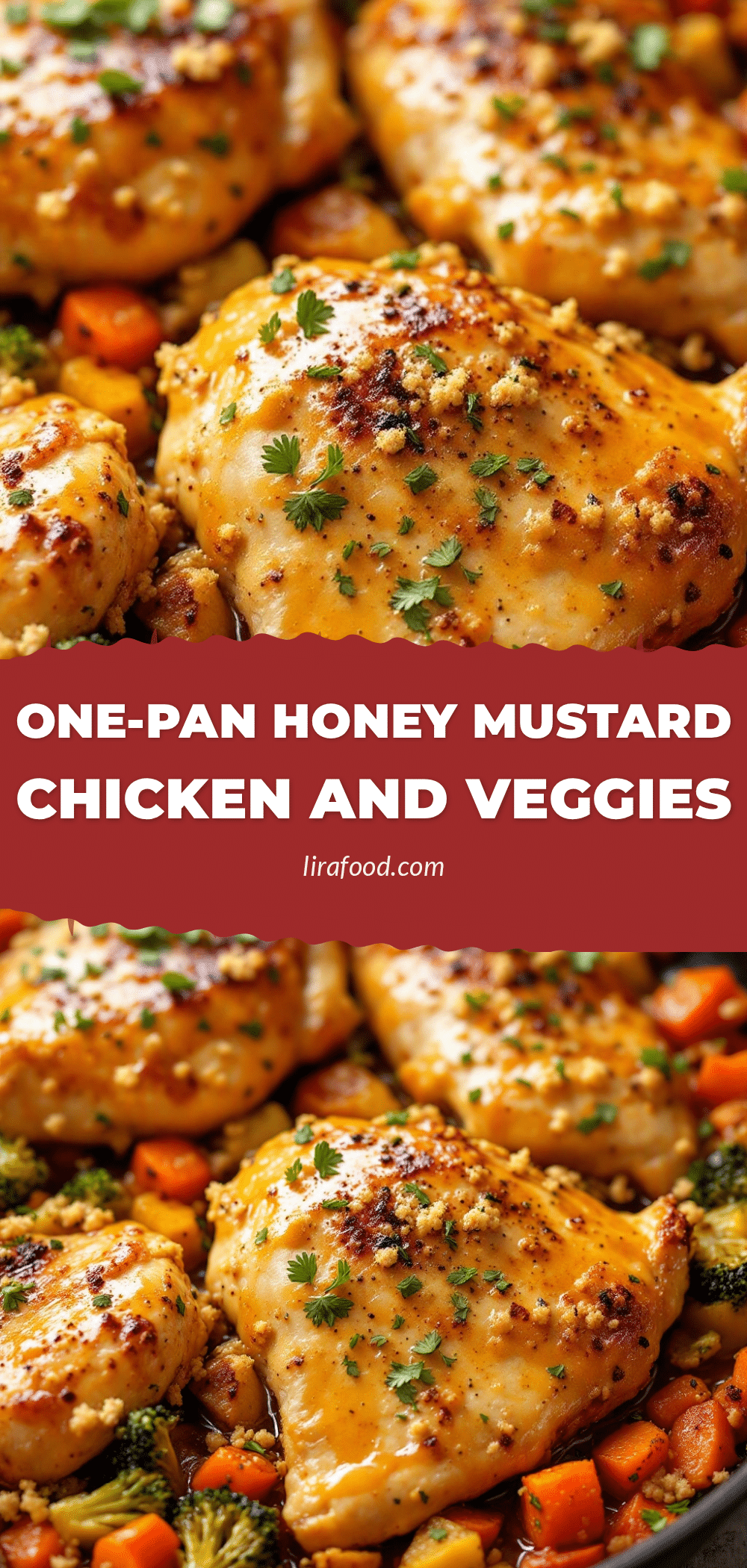
Easy One-Pan Honey Mustard Chicken and Fall Vegetables
A simple, one-pan meal featuring juicy chicken thighs and roasted fall vegetables coated in a sticky honey mustard glaze. Perfect for busy weeknights, this recipe requires minimal prep and cleanup while delivering maximum flavor.
- Prep Time: 15 minutes
- Cook Time: 40 minutes
- Total Time: 55 minutes
- Yield: 4 servings 1x
- Category: Main Course
- Cuisine: American
Ingredients
- 4 bone-in, skin-on chicken thighs (about 1.5 pounds)
- 1 tablespoon olive oil
- 1 teaspoon salt
- 1/2 teaspoon black pepper
- 1/2 teaspoon garlic powder
- 2 cups butternut squash, peeled and cut into 1-inch cubes
- 2 cups Brussels sprouts, trimmed and halved
- 1 large red onion, cut into 1-inch chunks
- 2 large carrots, peeled and cut into 1-inch pieces
- 2 tablespoons olive oil
- 1/2 teaspoon salt
- 1/4 teaspoon black pepper
- 1/4 teaspoon smoked paprika (optional)
- 1/4 cup honey
- 3 tablespoons Dijon mustard
- 1 tablespoon whole grain mustard
- 2 tablespoons apple cider vinegar
- 2 cloves garlic, minced
- 1 tablespoon olive oil
- 1/2 teaspoon dried thyme
- Fresh parsley or thyme, chopped (for garnish, optional)
- Flaky sea salt (for garnish, optional)
Instructions
- Preheat your oven to 425°F (220°C). Position a rack in the center of the oven. Line a large sheet pan with parchment paper if desired.
- In a small bowl, whisk together 1/4 cup honey, 3 tablespoons Dijon mustard, 1 tablespoon whole grain mustard, 2 tablespoons apple cider vinegar, 2 minced garlic cloves, 1 tablespoon olive oil, and 1/2 teaspoon dried thyme. Set aside about 2 tablespoons of this glaze for brushing on at the end.
- Pat the chicken thighs dry with paper towels. Place them in a bowl and drizzle with 1 tablespoon olive oil. Sprinkle with 1 teaspoon salt, 1/2 teaspoon black pepper, and 1/2 teaspoon garlic powder. Toss to coat.
- In a large bowl, combine the cubed butternut squash, halved Brussels sprouts, red onion chunks, and carrot pieces. Drizzle with 2 tablespoons olive oil and sprinkle with 1/2 teaspoon salt, 1/4 teaspoon black pepper, and 1/4 teaspoon smoked paprika if using. Toss to coat evenly.
- Spread the vegetables in a single layer on the prepared sheet pan, leaving space in the middle for the chicken. Nestle the chicken thighs skin-side up among the vegetables.
- Brush about half of the remaining honey mustard glaze over the chicken thighs and drizzle a little over the vegetables. Reserve the rest for later.
- Roast for 25 minutes. Remove the pan from the oven, flip the vegetables (leave the chicken skin-side up), and brush the chicken with more glaze. Return to the oven.
- Roast for another 15-20 minutes, until the chicken reaches an internal temperature of 165°F (74°C) and the vegetables are tender and caramelized.
- Remove the pan from the oven and let it rest for 5 minutes. Brush with the reserved glaze. Sprinkle with fresh herbs and flaky sea salt if using. Serve directly from the pan or transfer to a platter.
Notes
Pat the chicken skin dry for crispy skin. Cut vegetables to uniform 1-inch pieces for even cooking. Avoid overcrowding the pan to prevent steaming. Rotate the pan halfway through roasting. For extra caramelization, broil for the last 2-3 minutes. Leftovers can be stored in an airtight container in the refrigerator for up to 4 days or frozen for up to 3 months.
Nutrition
- Serving Size: 1 serving (includes
- Calories: 485
- Sugar: 22
- Sodium: 780
- Fat: 22
- Saturated Fat: 5
- Carbohydrates: 38
- Fiber: 8
- Protein: 32
Keywords: one-pan chicken, honey mustard chicken, fall vegetables, sheet pan dinner, easy weeknight dinner, roasted chicken thighs, butternut squash, Brussels sprouts