Love this? Save it for later!
Share the inspiration with your friends
I figured the orange flesh would just turn into a watery mush if I treated it like rice. You know how it goes—root vegetables usually want to stay firm or dissolve completely. There is no middle ground in my mind. So, when I first decided to try making a creamy non-traditional butternut squash risotto, I was prepared to fail. I had a bag of arborio rice, a roasted squash, and a whole lot of skepticism.
The recipe called for adding the squash puree at the end, which felt wrong. It felt like a shortcut. It felt like cheating on the traditional method where you cook the vegetables with the grains from scratch. I didn’t want to risk a gummy, gray mess that tasted like dinner for a toddler who hated texture.
But then I added the first ladle of broth. The rice started to release its starch, creating that signature creamy cloudiness that risotto lovers chase. When I folded in the sweet, velvety squash puree, the color transformed into something golden and rich. It wasn’t soup. It wasn’t mush. It was luxurious.
I stood over the stove, spoon in hand, watching the steam rise. The kitchen smelled like toasted nuts and earthy sweetness. I took a bite. The texture was perfect—al dente grains coated in a sauce that clung to every spoonful. I realized then that I had been overthinking it. The squash didn’t need to fight the rice; it needed to partner with it.
This dish stuck with me because it broke my own rules. It proved that sometimes the “non-traditional” route is actually the smarter one. It saved time, reduced cleanup, and delivered a flavor profile that felt both rustic and refined. Now, whenever I see a winter squash, I don’t just think soup. I think this creamy, comforting masterpiece that changed how I cook with vegetables.
Why You’ll Love This Recipe
This isn’t just another way to cook rice. It is a lesson in efficiency without sacrificing soul. I have tested this method with several different types of squash, and the result is consistently better than the traditional approach where you simmer the raw vegetable with the grain for forty minutes. Here is why this version wins every time.
- Quick & Easy: By roasting the squash separately, you cut down the active cooking time significantly. The risotto itself comes together in about 25 minutes, making it perfect for busy weeknights when you want something fancy but don’t have hours to stand by the stove.
- Simple Ingredients: You likely already have the pantry staples. Arborio rice, onion, white wine, broth, and butter are standard. The only special item is the squash, which is widely available and affordable in the fall and winter.
- Perfect for Cozy Dinners: This dish is ideal for chilly evenings. It pairs wonderfully with a glass of Chardonnay or a warm candlelit setting. It feels like a hug in a bowl.
- Crowd-Pleaser: Even people who claim they don’t like vegetables usually devour this. The sweetness of the squash balances the savory cheese and broth perfectly. It is hard to find a picky eater who walks away unsatisfied.
- Unbelievably Delicious: The texture is next-level comfort food. It is creamy without being heavy, and sweet without being dessert-like. It hits that sweet spot between savory and sweet that keeps you coming back for seconds.
What makes this recipe different from the rest is the technique. Most people boil the squash, which adds water weight and dilutes the flavor. Roasting it first concentrates the sugars and adds a nutty depth that boiling just can’t achieve. This isn’t just another version—it’s your best version. It taps into that feeling of eating something made with care, where the flavors are balanced and the texture is silky smooth. It is the kind of meal that makes you close your eyes after the first bite and just appreciate the moment.
What Ingredients You Will Need
This recipe uses simple, wholesome ingredients to deliver bold flavor and satisfying texture without the fuss. The key is quality over quantity. Since there are not many components, each one needs to shine. Here is what you will need to make this creamy non-traditional butternut squash risotto work.
For the Squash Base
- Butternut squash, peeled and cubed (about 2 pounds) – Roasting this first is non-negotiable for the best flavor.
- Olive oil – For tossing with the squash before roasting.
- Salt and pepper – To season the squash evenly.
For the Risotto

- Arborio rice (1 ½ cups) – This short-grain rice is essential. It has the high starch content needed to create that creamy sauce. I prefer Riccaro brand for its consistent grain size.
- Unsalted butter (3 tablespoons) – Divided use. One tablespoon for sautéing, two for finishing.
- Yellow onion, finely diced (1 medium) – Provides the aromatic base.
- Garlic, minced (2 cloves) – Adds a necessary pungent kick.
- Dry white wine (½ cup) – Use a Sauvignon Blanc or Pinot Grigio. Do not use cooking wine.
- Vegetable or chicken broth (5-6 cups) – Keep this hot in a separate saucepan.
- Heavy cream (¼ cup) – Optional, but adds extra richness for that “non-traditional” creamy texture.
- Parmesan cheese, freshly grated (½ cup) – Freshly grated melts better than the pre-shredded stuff in a bag.
- Sage leaves (6-8 fresh leaves) – Fried in butter for garnish, or chopped into the risotto for earthy flavor.
If you cannot find butternut squash, acorn squash is a good substitute, though it has a slightly different texture. For a dairy-free option, swap the butter and cream for olive oil and use nutritional yeast instead of Parmesan. The flavor will be different, but still delicious.
Equipment Needed
You don’t need a fancy kitchen to make this, but having the right tools helps. A heavy-bottomed saucepan or Dutch oven is crucial for the risotto. It distributes heat evenly and prevents the rice from scorching at the bottom. I used to use a thin skillet, and I learned the hard way that it burns easily.
A baking sheet is needed for roasting the squash. Line it with parchment paper for easy cleanup. A potato masher or immersion blender is required to puree the roasted squash. An immersion blender is faster and easier to clean, but a masher works if you don’t mind a few chunks for texture.
A large pot for the broth is necessary to keep it simmering. Ladles are essential for adding broth one at a time. If you don’t have a Dutch oven, a heavy stainless steel pot works fine. Just make sure it has a lid to keep the broth hot.
For budget-friendly options, you can use a regular roasting pan instead of a baking sheet if you have enough squash. A standard wooden spoon is all you need for stirring. The most important piece of equipment is patience, but since we are talking tools, a good knife and cutting board are vital for prepping the squash safely.
Preparation Method
- Roast the Squash (20 minutes): Preheat your oven to 400°F (200°C). Peel the butternut squash and remove the seeds. Cut the flesh into 1-inch cubes. Toss them on a baking sheet with olive oil, salt, and pepper. Roast for 20-25 minutes until tender. Let them cool slightly, then mash or blend them into a smooth puree. This step builds the flavor foundation.
- Heat the Broth (5 minutes): While the squash roasts, pour your vegetable or chicken broth into a medium saucepan. Bring it to a gentle simmer and keep it warm on low heat. Cold broth will shock the rice and stop the cooking process.
- Sauté Aromatics (5 minutes): In your heavy-bottomed pot, melt 1 tablespoon of butter over medium heat. Add the diced onion and a pinch of salt. Cook for 5 minutes until translucent. Add the minced garlic and cook for 1 more minute until fragrant. Do not let the garlic brown.
- Toast the Rice (2 minutes): Add the arborio rice to the pot. Stir constantly for 2 minutes. The rice should look slightly translucent at the edges and smell nutty. This toasting step seals the grain and helps it maintain structure during cooking.
- Deglaze with Wine (3 minutes): Pour in the white wine. Stir continuously until the wine has completely evaporated. You should hear the sizzling stop. This adds acidity and brightness to balance the rich squash.
- Add Broth Gradually (25 minutes): Begin adding the hot broth one ladle at a time. Stir frequently. Wait until the liquid is mostly absorbed before adding the next ladle. This process releases the starch. Keep the heat at medium-low. Total cooking time for the rice is about 18-20 minutes.
- Combine and Finish (5 minutes): When the rice is tender but still has a slight bite (al dente), fold in the squash puree. Stir in the remaining 2 tablespoons of butter and the heavy cream if using. Remove from heat.
- Add Cheese and Rest (2 minutes): Stir in the Parmesan cheese. Cover the pot and let it rest for 2 minutes. This allows the flavors to meld and the texture to stabilize. Serve immediately with fried sage leaves on top.
Cooking Tips & Techniques
The biggest mistake people make with risotto is walking away. You have to stir. It is not a “set it and forget it” dish. Stirring agitates the grains, releasing the starch that creates the creamy sauce. If you don’t stir, you get sticky, clumpy rice, not a creamy risotto.
Keep the broth hot. I cannot stress this enough. If you add cold broth to hot rice, the cooking temperature drops, and the rice cooks unevenly. Keep your broth pot on a low burner throughout the entire process.
Don’t rush the wine step. If you pour the wine in and it doesn’t sizzle, your heat is too low. If it splatters everywhere, your heat is too high. You want a gentle simmer. The alcohol needs to cook off to leave behind the flavor.
Another tip is to taste as you go. Risotto can be bland if the broth isn’t seasoned enough. Taste the rice halfway through cooking and adjust the salt in the broth if needed. The final dish should be well-seasoned, as the cheese and squash add their own saltiness.
If the risotto becomes too thick while sitting, add a splash of hot water or broth to loosen it. Risotto continues to absorb liquid off the heat, so it will thicken as it cools.
Variations & Adaptations
While this creamy non-traditional butternut squash risotto is great on its own, there are many ways to tweak it. You can add protein by stirring in cooked chickpeas or sautéed chicken breast. For a vegetarian boost, add white beans or roasted Brussels sprouts.
For a different flavor profile, swap the sage for thyme or rosemary. Thyme pairs beautifully with squash and adds a lemony note. You can also add a pinch of nutmeg, which is a classic pairing with winter squash and cream.
If you want a spicy kick, add red pepper flakes to the butter when sautéing the onions. The heat contrasts nicely with the sweet squash. For a vegan version, use vegetable broth, olive oil instead of butter, and nutritional yeast instead of Parmesan. It won’t be exactly the same, but it will still be creamy and satisfying.
I once tried adding caramelized onions to this recipe. It was a bit too sweet, so I stick to fresh sage or thyme. You can also use pumpkin puree in a pinch, but butternut squash has a smoother texture and less water content, which works better for risotto.
Serving & Storage Suggestions
Serve this risotto warm, straight from the pot. It looks best in shallow bowls to show off the creamy texture. Garnish with crispy fried sage leaves, a drizzle of truffle oil, or extra grated Parmesan. It pairs well with a simple arugula salad tossed with lemon vinaigrette to cut through the richness.
For storage, let the risotto cool completely and transfer it to an airtight container. It will last in the refrigerator for up to 3 days. The rice will absorb more liquid, so it will become quite thick.
To reheat, add a splash of water or broth and warm it gently on the stovetop over low heat, stirring frequently. You can also reheat it in the microwave, but stir every 30 seconds to prevent hot spots. It does not freeze well, as the rice tends to become grainy and mushy after thawing.
Nutritional Information & Benefits
This dish is a good source of complex carbohydrates from the rice and fiber from the squash. Butternut squash is rich in Vitamin A, Vitamin C, and potassium. These nutrients support immune health and vision.
While risotto is calorie-dense due to the butter and cheese, it is also satisfying, which helps with portion control. The healthy fats from the cheese and cream provide energy. For those watching sodium, use low-sodium broth and reduce the added salt.
It is naturally gluten-free if you use gluten-free broth and verify your rice is certified gluten-free. It is not low-carb, but it is a balanced meal when paired with a green vegetable.
Conclusion
This creamy non-traditional butternut squash risotto is a game-changer for weeknight dinners. It is easy, delicious, and feels special. I hope you try it and find your own favorite variations. Customize it with your favorite herbs or proteins.
Leave a comment below if you make it. I love hearing how you adapt recipes. Share your photos on social media and tag me. Happy cooking!
FAQs
Can I use instant pot for this risotto?
Yes, you can. Sauté the onions and toast the rice in the Instant Pot. Add the wine, broth, and squash puree. Cook on high pressure for 6 minutes, then quick release. Stir in the butter and cheese.
Why is my risotto soupy?
It might need more cooking time. Keep adding broth and stirring until the rice is tender. If it is still soupy after cooking, simmer it uncovered to reduce the liquid.
Can I make the squash puree ahead of time?
Absolutely. Roast and puree the squash a day or two in advance. Store it in the fridge in an airtight container. This saves time on the night you cook.
What kind of wine should I use?
Use a dry white wine like Sauvignon Blanc, Pinot Grigio, or Chardonnay. Do not use sweet wines, as they will make the dish too sweet.
Is arborio rice the only rice I can use?
Carnaroli and Vialone Nano are also good options. They have higher starch content than long-grain rice. Do not use basmati or jasmine rice, as they will not get creamy.
Pin This Recipe!
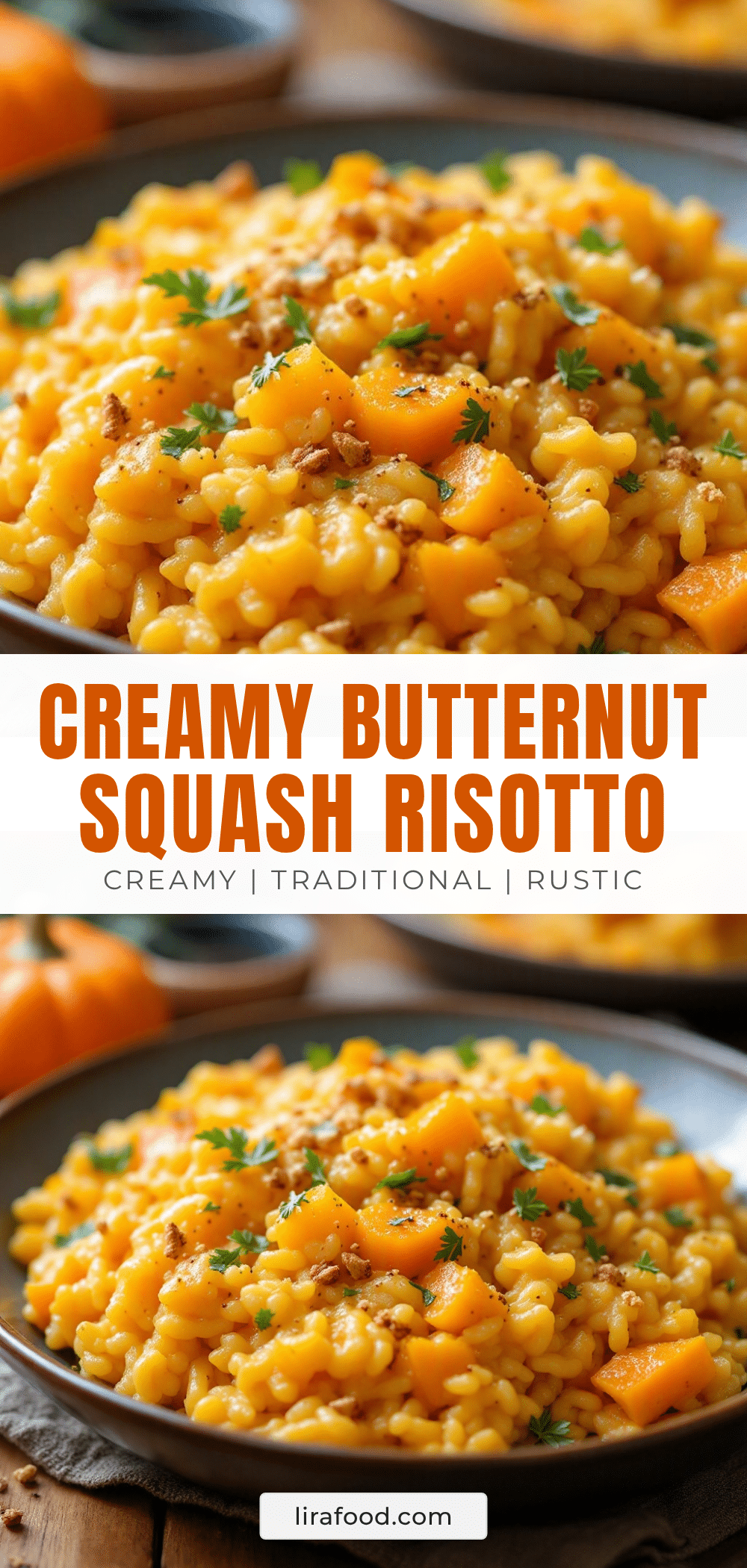
Creamy Non-Traditional Butternut Squash Risotto

A luxurious and creamy risotto that uses roasted butternut squash puree for a rich, velvety texture without the traditional long simmering of raw vegetables. This efficient method delivers rustic flavor and perfect al dente grains.
- Prep Time: 20 minutes
- Cook Time: 30 minutes
- Total Time: 50 minutes
- Yield: 4 servings 1x
- Category: Main Course
- Cuisine: Italian
Ingredients
- 2 pounds butternut squash, peeled and cubed
- Olive oil, for tossing squash
- Salt and pepper, for seasoning squash
- 1 ½ cups Arborio rice
- 3 tablespoons unsalted butter, divided
- 1 medium yellow onion, finely diced
- 2 cloves garlic, minced
- ½ cup dry white wine (e.g., Sauvignon Blanc or Pinot Grigio)
- 5–6 cups vegetable or chicken broth, kept hot
- ¼ cup heavy cream (optional)
- ½ cup Parmesan cheese, freshly grated
- 6–8 fresh sage leaves
Instructions
- Preheat oven to 400°F (200°C). Toss cubed squash with olive oil, salt, and pepper. Roast for 20-25 minutes until tender, then mash or blend into a smooth puree.
- While squash roasts, bring broth to a gentle simmer in a saucepan and keep warm on low heat.
- In a heavy-bottomed pot, melt 1 tablespoon butter over medium heat. Sauté diced onion for 5 minutes until translucent, then add garlic and cook for 1 minute.
- Add Arborio rice and stir constantly for 2 minutes until edges are translucent and rice smells nutty.
- Pour in white wine and stir until completely evaporated.
- Add hot broth one ladle at a time, stirring frequently and waiting for absorption before adding more. Cook for 18-20 minutes until rice is al dente.
- Fold in squash puree, remaining 2 tablespoons butter, and heavy cream (if using). Remove from heat.
- Stir in Parmesan cheese, cover, and let rest for 2 minutes before serving with fried sage leaves.
Notes
Roasting the squash concentrates sugars and adds nutty depth compared to boiling. Keep broth hot to ensure even cooking. Stir frequently to release starch for creaminess. Risotto thickens as it cools; add splash of hot water or broth to loosen if needed. Do not freeze as rice becomes grainy.
Nutrition
- Serving Size: 1 cup
- Calories: 450
- Sugar: 8
- Sodium: 800
- Fat: 18
- Saturated Fat: 9
- Carbohydrates: 60
- Fiber: 5
- Protein: 10
Keywords: butternut squash risotto, creamy risotto, vegetarian dinner, winter squash recipe, arborio rice, gluten-free option, cozy dinner