Love this? Save it for later!
Share the inspiration with your friends
My husband took one bite of this bowl, paused, and said, “This tastes like the inside of a sweater. In the best way.” And honestly? He wasn’t wrong. That first forkful—sweet roasted squash, chewy farro, tart dried cranberries, all tangled together with a maple-tahini drizzle—it does feel like wrapping yourself in something warm. I wasn’t trying to create a masterpiece that night. I was just staring at a fridge full of fall produce, wondering what to do with it all before it went soft. But sometimes the best recipes come from that exact kind of chaos, you know?
I had a bag of pre-cut butternut squash from the store, a half-empty bag of farro I’d bought on a whim, and a red onion that was starting to look a little desperate. So I tossed everything on a sheet pan, roasted it until the edges got all caramelized and crispy, and threw together a quick dressing with stuff I already had in the pantry. The result was this warm, hearty, deeply satisfying bowl that made me feel like I had my life together—even though I was eating it standing up over the kitchen counter. That’s the magic of a good grain bowl. It doesn’t judge you. It just feeds you.
This cozy fall harvest grain bowl with roasted vegetables has become my go-to for those in-between weeks when the weather can’t decide if it wants to be warm or cold, and neither can I. It’s forgiving, flexible, and somehow tastes better the next day for lunch. I’ve made it three times since that first accidental dinner, and each time I tweak something small. But the heart of it stays the same: roasted vegetables, chewy grains, something crunchy, something creamy, and a dressing that ties it all together like a good cardigan. This is the kind of recipe that reminds you why fall is worth the chill.
Why You’ll Love This Recipe
I’ve tested this bowl more times than I care to admit, tweaking the roasting times, swapping grains, and even messing up the dressing ratio once (don’t ask). So trust me when I say—this version is the one. Here’s why it works:
- Quick & Easy: From start to finish, this comes together in about 45 minutes. Most of that is hands-off roasting time, so you can prep the dressing or just stand there and stare out the window like I do.
- Simple Ingredients: Nothing fancy here. You probably already have olive oil, salt, pepper, and maple syrup in your kitchen. The rest is just seasonal produce and pantry grains.
- Perfect for Meal Prep: This bowl is a meal prep dream. Roast a big batch of vegetables on Sunday, cook a pot of farro, and assemble bowls all week long. It actually gets better as the flavors meld together.
- Crowd-Pleaser: I’ve served this to my mom (who is suspicious of anything without meat), my vegetarian friend, and my toddler—and everyone cleaned their bowls. The roasted squash gets sweet and almost candy-like, which wins over even the pickiest eaters.
- Unbelievably Delicious: The texture combo here is next-level. You’ve got the chewy farro, the soft roasted vegetables, the crunch of toasted pepitas, and the creamy tang of feta all in one bite. And that maple-tahini dressing? It’s basically liquid gold.
What makes this recipe different from the dozens of other grain bowls out there is the balance. I spent a lot of time figuring out the right ratio of dressing to grain, the perfect roasting temperature for vegetables that are tender but not mushy, and the ideal mix of savory and sweet. This isn’t just another fall bowl—it’s the one you’ll keep coming back to. And honestly, it’s the kind of meal that makes you feel taken care of, even if you made it yourself.
What Ingredients You Will Need
This recipe uses simple, wholesome ingredients to deliver bold flavor and satisfying texture without the fuss. Most of these are pantry staples or easy to find at any grocery store this time of year.
For the Roasted Vegetables
- Butternut squash, peeled and cubed into 1-inch pieces (about 3 cups) — I prefer buying pre-cut to save time, but whole squash works too. Look for squash that feels heavy for its size.
- Brussels sprouts, trimmed and halved (about 2 cups) — Smaller sprouts are sweeter and less bitter. If they’re huge, quarter them instead.
- Red onion, cut into 1-inch wedges — The wedges hold their shape better than rings and get beautifully caramelized.
- Olive oil — A good quality extra virgin olive oil makes a difference here. I use California Olive Ranch for roasting.
- Salt and black pepper — Don’t be shy. Seasoning the vegetables well before roasting is key.
- Dried thyme — Adds that cozy, earthy fall flavor. Fresh thyme works too—just use about 1 tablespoon of leaves.
For the Grain Base
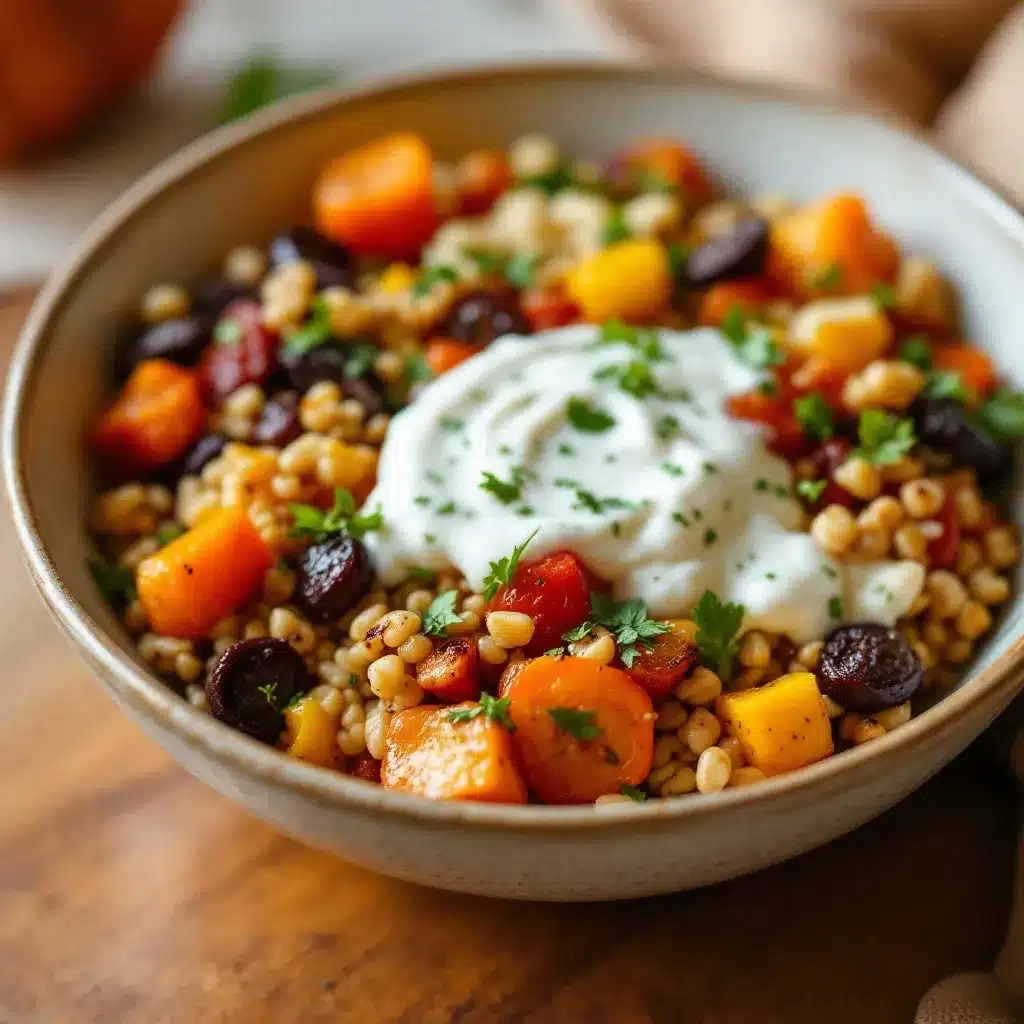
- Farro, 1 cup dry — I love the chewy texture of semi-pearled farro. It holds up well against the roasted vegetables and doesn’t get mushy. You can use pearled farro for a faster cook time (about 15 minutes instead of 25).
- Vegetable broth or water — Cooking farro in broth adds so much more flavor. I use Swanson vegetable broth, but homemade works great too.
- Bay leaf — Optional, but it adds a subtle depth to the cooking liquid.
For the Maple-Tahini Dressing
- Tahini, ¼ cup — Look for tahini that’s smooth and pourable, not thick and pasty. I recommend Soom or Seed + Mill brands for the best texture.
- Maple syrup, 2 tablespoons — Pure maple syrup, not pancake syrup. The real stuff makes a difference in flavor.
- Lemon juice, 2 tablespoons — Freshly squeezed is non-negotiable here. Bottled lemon juice tastes flat.
- Warm water, 3-4 tablespoons — This helps thin the dressing to a drizzle-able consistency.
- Salt, a pinch — Just to balance the sweetness.
For the Toppings
- Dried cranberries, ⅓ cup — Adds pops of sweetness and chewy texture. Look for unsweetened if you want to control the sugar.
- Pepitas (pumpkin seeds), ¼ cup — Toasted for extra crunch. You can toast them in a dry skillet for 2-3 minutes until they start to pop.
- Crumbled feta cheese, ½ cup — Adds a salty, creamy finish. Goat cheese works beautifully too if you prefer a tangier flavor.
- Fresh parsley, chopped, for garnish — Optional but nice for a pop of green.
Equipment Needed
You don’t need a fancy kitchen to make this bowl. Here’s what you’ll actually use:
- Large rimmed baking sheet — A half-sheet pan is ideal. If you overcrowd the pan, the vegetables steam instead of roasting. Use two pans if needed.
- Medium saucepan — For cooking the farro. Any pot with a tight-fitting lid works.
- Small bowl or jar — For whisking the dressing. A mason jar works great—just shake it up.
- Chef’s knife and cutting board — A sharp knife makes prepping squash and Brussels sprouts so much easier. Trust me on this.
- Measuring cups and spoons — For accuracy, especially with the dressing.
- Mixing bowl — For tossing the vegetables with oil and seasoning before roasting.
If you don’t have a rimmed baking sheet, you can use a regular baking sheet with raised edges. Just watch the vegetables closely so they don’t slide off. And if you’re using a non-stick pan, reduce the roasting temperature by 25 degrees to prevent over-browning.
Preparation Method
Let’s walk through this step by step. I’ve included all the little details I wish someone had told me the first time I made this.
Step 1: Preheat and Prep
Preheat your oven to 425°F (220°C). Line a large rimmed baking sheet with parchment paper if you want easier cleanup—totally optional, but I do it every time now.
While the oven heats, wash and prep your vegetables. Peel the butternut squash (if using whole), scoop out the seeds, and cut it into 1-inch cubes. Trim the Brussels sprouts and halve them. Cut the red onion into 1-inch wedges. Try to keep everything roughly the same size so they cook evenly.
Step 2: Roast the Vegetables
In a large mixing bowl, toss the cubed squash, halved Brussels sprouts, and onion wedges with 3 tablespoons of olive oil, 1 teaspoon of salt, ½ teaspoon of black pepper, and 1 teaspoon of dried thyme. Use your hands to really coat everything—it’s the most efficient way.
Spread the vegetables in a single layer on the prepared baking sheet. Make sure they’re not piled on top of each other. If they’re crowded, they’ll steam instead of getting those beautiful caramelized edges. Roast for 25-30 minutes, flipping halfway through with a spatula. You’ll know they’re done when the squash is tender and the Brussels sprouts are crispy on the outside. The onions should be soft and slightly charred at the tips.
Step 3: Cook the Farro
While the vegetables roast, cook the farro. Rinse 1 cup of farro under cold water in a fine-mesh strainer. In a medium saucepan, combine the rinsed farro with 3 cups of vegetable broth (or water) and a bay leaf if using. Bring to a boil over high heat, then reduce the heat to low, cover, and simmer for 25-30 minutes for semi-pearled farro, or 15-20 minutes for pearled farro. The farro is done when it’s tender but still chewy—think al dente pasta. Drain any excess liquid and remove the bay leaf. Fluff with a fork and set aside.
Step 4: Make the Dressing
In a small bowl or mason jar, combine ¼ cup tahini, 2 tablespoons maple syrup, and 2 tablespoons lemon juice. Whisk or shake until smooth. The mixture will seize up at first—that’s normal. Slowly add warm water, 1 tablespoon at a time, whisking after each addition until you reach a pourable, drizzle-able consistency. You’ll likely need about 3-4 tablespoons of water. Add a pinch of salt and whisk again. Taste and adjust—more lemon for tang, more maple for sweetness, more water for thinner consistency.
Step 5: Toast the Pepitas
In a small dry skillet over medium heat, add the pepitas. Toast them for 2-3 minutes, shaking the pan frequently, until they start to pop and smell nutty. Be careful—they burn fast. Immediately transfer them to a small bowl to stop the cooking.
Step 6: Assemble the Bowls
Divide the warm farro among four bowls. Top each with a generous portion of roasted vegetables. Sprinkle with dried cranberries, toasted pepitas, and crumbled feta. Drizzle the maple-tahini dressing over everything—don’t be shy with it. Garnish with fresh parsley if you’re feeling fancy. Serve immediately while everything is still warm.
If you’re meal-prepping, store the components separately and assemble just before eating. The farro and vegetables keep well in the fridge for up to 5 days. The dressing thickens when chilled, so let it sit at room temperature for 10 minutes or add a splash of warm water to thin it out.
Cooking Tips & Techniques
I’ve made every mistake in the book with this recipe so you don’t have to. Here’s what I learned the hard way:
Don’t skip the flipping. I know it’s tempting to just let the vegetables roast undisturbed, but flipping them halfway ensures even browning. The first time I made this, I forgot to flip and ended up with half-charred, half-raw Brussels sprouts. Not my finest moment.
Cut your vegetables uniformly. This is the single most important tip for even roasting. If your squash cubes are twice the size of your Brussels sprouts halves, one will be overcooked while the other is still crunchy. Take the extra 2 minutes to make them similar in size.
Toast your grains. Before cooking the farro, try toasting it in the dry saucepan for 2-3 minutes over medium heat, stirring constantly. It adds a nutty depth that takes this bowl from good to great. I started doing this after reading about it in a cookbook, and I’ll never go back.
Make the dressing ahead. The tahini dressing actually gets better after sitting in the fridge for a few hours—the flavors meld and mellow out. Just remember to let it come to room temperature before using, and whisk in a little warm water if it’s too thick.
Use a hot pan for the farro. When you add the farro to the boiling broth, make sure the liquid is at a full rolling boil. If you add it too early, the grains will cook unevenly. And don’t lift the lid while it’s simmering—that steam is doing the work.
Season in layers. Don’t just salt the vegetables before roasting. Season the cooking liquid for the farro, add salt to the dressing, and finish with a tiny pinch of flaky sea salt on top of each bowl. Each layer of seasoning builds on the last.
Variations & Adaptations
This bowl is endlessly customizable. Here are some of my favorite twists:
Switch up the grains. Not a fan of farro? Use quinoa (cook for 15 minutes), brown rice (cook for 45 minutes), or even pearl couscous (cook for 10 minutes). Each grain changes the texture slightly, but they all work beautifully. I’ve even used leftover cooked barley from a soup recipe, and it was fantastic.
Change the vegetables. Butternut squash and Brussels sprouts are classic, but sweet potatoes, carrots, parsnips, or cauliflower all roast beautifully. In early fall, I swap in diced apples during the last 10 minutes of roasting for a sweet-tart pop. Just keep the total volume of vegetables roughly the same.
Make it vegan. Skip the feta or use a vegan feta alternative. The bowl is still incredibly satisfying without it. I’ve also used crumbled tofu marinated in a little soy sauce and nutritional yeast for a similar salty, crumbly texture.
Add protein. This bowl is great as-is, but if you want to bulk it up, add roasted chickpeas, grilled chicken, or flaked salmon. I sometimes toss a can of drained chickpeas on the baking sheet with the vegetables during the last 15 minutes of roasting. They get crispy and delicious.
Try a different dressing. The maple-tahini dressing is my favorite, but a balsamic vinaigrette or a simple lemon-herb dressing works beautifully too. For a creamier option, whisk together ¼ cup Greek yogurt with 2 tablespoons lemon juice, 1 tablespoon olive oil, and a pinch of salt.
Seasonal swaps. In winter, use roasted root vegetables like parsnips and turnips. In spring, try asparagus and peas. In summer, grilled zucchini and corn. This bowl is a template that works year-round.
Serving & Storage Suggestions
Serve this bowl warm, right after assembling. The contrast between the warm farro and roasted vegetables, the cool feta, and the room-temperature dressing is part of the magic. If you’re serving a crowd, set up a bowl bar with all the components in separate bowls and let everyone build their own—it’s always a hit.
This bowl pairs beautifully with a simple green salad dressed with lemon juice and olive oil. For a heartier meal, serve it alongside a bowl of easy comforting oxtail stew for a cozy fall dinner that’ll warm you from the inside out. Or start your meal with a cup of cozy cold cucumber soup if you’re craving something light before the hearty bowl.
For storage, keep the components separate. The cooked farro and roasted vegetables each go in their own airtight container in the refrigerator for up to 5 days. The dressing stays good for about a week. When you’re ready to eat, reheat the farro and vegetables together in the microwave or in a skillet with a splash of water. Then add the cold toppings and dressing.
The flavors actually develop and deepen overnight. I often make a double batch on Sunday just so I can have it for lunch all week. The roasted vegetables get even sweeter, and the farro absorbs any remaining dressing beautifully. Just don’t add the feta or pepitas until right before eating, or they’ll get soggy.
You can freeze the roasted vegetables and cooked farro separately for up to 3 months. Thaw overnight in the refrigerator and reheat before serving. The dressing doesn’t freeze well, so make a fresh batch when you’re ready to use the frozen components.
Nutritional Information & Benefits
This bowl is packed with nutrients that make you feel good without trying too hard. Here’s a rough estimate per serving (based on 4 servings):
- Calories: ~450
- Protein: 14g
- Fat: 18g (mostly from olive oil, tahini, and pepitas)
- Carbohydrates: 62g
- Fiber: 12g
- Sugar: 16g (naturally occurring from maple syrup and cranberries)
Butternut squash is loaded with vitamin A (one cup gives you over 400% of your daily needs) and vitamin C. Brussels sprouts are a powerhouse of fiber and vitamin K. Farro is an ancient grain rich in protein, fiber, and magnesium—it keeps you full and satisfied for hours. Tahini is made from sesame seeds, which are packed with healthy fats and calcium. And pepitas are a great source of zinc and iron.
This bowl is naturally vegetarian and can easily be made vegan by skipping the feta. It’s also gluten-free if you swap the farro for quinoa or brown rice (though farro itself is low in gluten and tolerated by some with sensitivities). It’s high in fiber, which supports digestive health, and the combination of complex carbohydrates and healthy fats provides steady energy without the crash.
I love that this is one of those meals that feels indulgent but is actually really good for you. It’s the kind of food that makes you feel nourished, not deprived.
Conclusion
This cozy fall harvest grain bowl with roasted vegetables has become my go-to for those days when I need something that feels both comforting and virtuous. It’s the kind of meal that makes you forget you’re eating vegetables—because honestly, you’re too busy enjoying the combination of sweet, savory, tangy, and crunchy all in one bite. I’ve made it for solo dinners, for meal prep lunches, and for friends who left asking for the recipe. It never disappoints.
What I love most about this recipe is how forgiving it is. You can swap ingredients based on what you have, adjust the seasoning to your taste, and it still turns out delicious. That’s the sign of a truly great recipe—one that works with you, not against you. So go ahead and make it your own. Add extra feta if that’s your thing. Double the dressing. Throw in some leftover roasted chickpeas. The bowl is yours to play with.
I’d love to hear how yours turns out. Did you make any substitutions? Find a new favorite combination? Drop a comment below and let me know—I read every single one and I love seeing your creations. And if you’re looking for more cozy fall recipes, don’t miss my perfect Sunday pork roast with easy apple and sage stuffing or my cozy chamomile honey French toast for another warm, comforting meal. Happy cooking, friends!
Frequently Asked Questions
Can I use a different grain instead of farro?
Absolutely! Quinoa, brown rice, pearl couscous, or even barley all work great. Just adjust the cooking time and liquid ratio based on the grain you choose. Quinoa takes about 15 minutes, brown rice about 45 minutes, and pearl couscous about 10 minutes.
How do I prevent my roasted vegetables from getting soggy?
The key is to not overcrowd the baking sheet. Give the vegetables space so they roast instead of steam. Also, make sure they’re dry before tossing them with oil—pat them with a paper towel if needed. And flip them halfway through for even browning.
Can I make this bowl ahead of time for meal prep?
Yes! This is one of the best meal prep recipes. Cook the farro and roast the vegetables separately, then store them in airtight containers in the fridge for up to 5 days. Keep the dressing in a separate jar and add fresh toppings like feta and pepitas just before eating.
What can I use instead of tahini for the dressing?
If you don’t have tahini, you can use almond butter, sunflower seed butter, or even Greek yogurt mixed with a little olive oil. The flavor will change slightly, but it’ll still be delicious. For a nut-free option, sunflower seed butter works beautifully.
Is this recipe gluten-free?
Farro is an ancient wheat grain and contains some gluten, though less than modern wheat. If you need a gluten-free option, swap the farro for quinoa, brown rice, or certified gluten-free oats. Everything else in the recipe is naturally gluten-free.
Pin This Recipe!
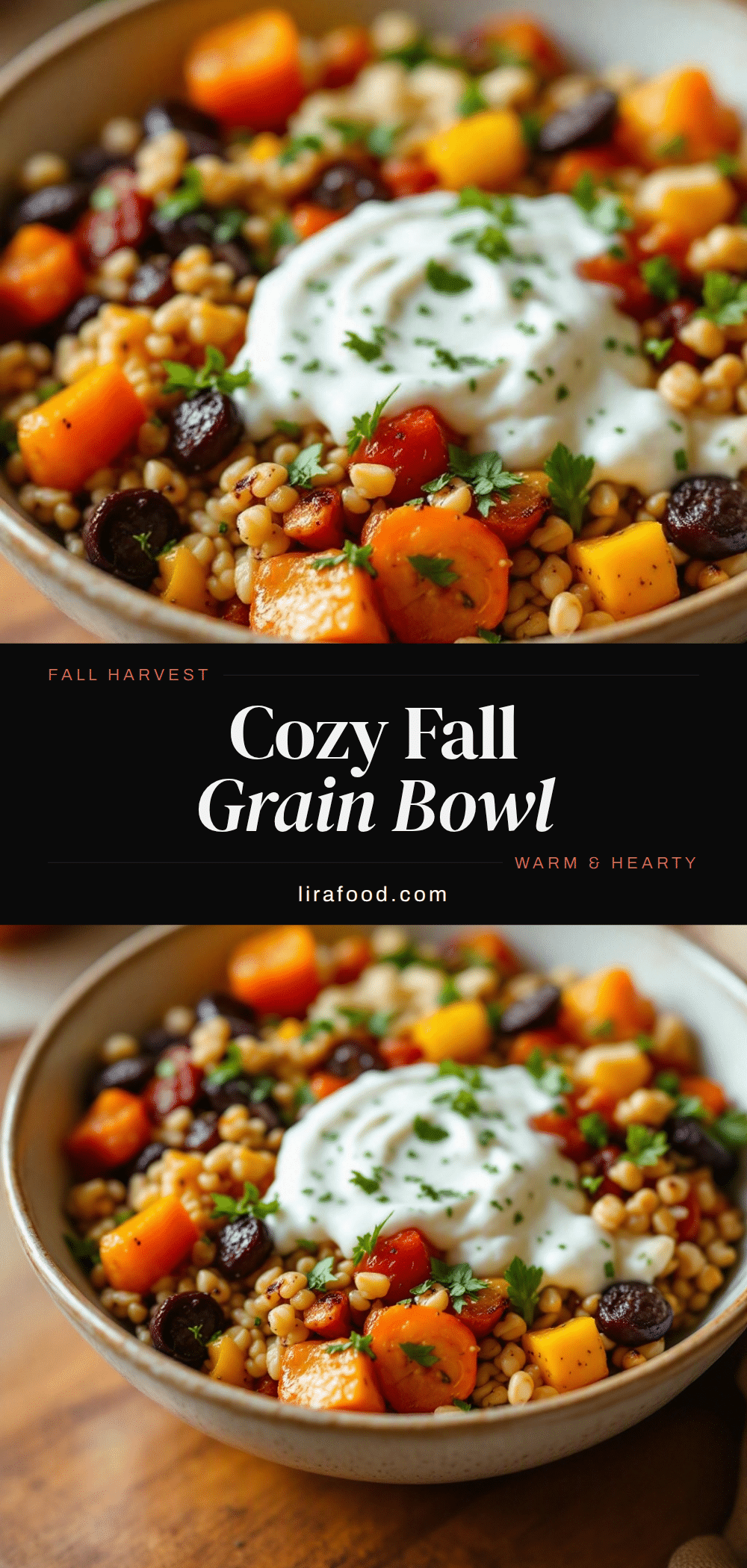
Cozy Fall Harvest Grain Bowl with Roasted Vegetables
A warm, hearty grain bowl featuring roasted butternut squash, Brussels sprouts, and red onion over chewy farro, all drizzled with a creamy maple-tahini dressing. Perfect for meal prep and customizable with seasonal vegetables.
- Prep Time: 15 minutes
- Cook Time: 30 minutes
- Total Time: 45 minutes
- Yield: 4 servings 1x
- Category: Main Course
- Cuisine: American
Ingredients
- 1 butternut squash, peeled and cubed into 1-inch pieces (about 3 cups)
- 2 cups Brussels sprouts, trimmed and halved
- 1 red onion, cut into 1-inch wedges
- 3 tablespoons olive oil
- 1 teaspoon salt
- ½ teaspoon black pepper
- 1 teaspoon dried thyme
- 1 cup farro (semi-pearled or pearled)
- 3 cups vegetable broth or water
- 1 bay leaf (optional)
- ¼ cup tahini
- 2 tablespoons maple syrup
- 2 tablespoons lemon juice
- 3–4 tablespoons warm water
- Pinch of salt
- ⅓ cup dried cranberries
- ¼ cup pepitas (pumpkin seeds)
- ½ cup crumbled feta cheese
- Fresh parsley, chopped (for garnish)
Instructions
- Preheat oven to 425°F (220°C). Line a large rimmed baking sheet with parchment paper (optional).
- In a large bowl, toss cubed squash, halved Brussels sprouts, and onion wedges with olive oil, salt, pepper, and dried thyme until well coated.
- Spread vegetables in a single layer on the prepared baking sheet. Roast for 25-30 minutes, flipping halfway through, until squash is tender and Brussels sprouts are crispy.
- While vegetables roast, rinse farro under cold water. In a medium saucepan, combine farro, vegetable broth (or water), and bay leaf. Bring to a boil, then reduce heat to low, cover, and simmer for 25-30 minutes (semi-pearled) or 15-20 minutes (pearled) until tender but chewy. Drain excess liquid, remove bay leaf, and fluff with a fork.
- In a small bowl or jar, whisk together tahini, maple syrup, and lemon juice until smooth. Gradually add warm water, 1 tablespoon at a time, whisking until pourable. Add a pinch of salt and adjust to taste.
- In a dry skillet over medium heat, toast pepitas for 2-3 minutes until fragrant and starting to pop. Transfer to a bowl immediately.
- Assemble bowls: Divide warm farro among four bowls. Top with roasted vegetables, dried cranberries, toasted pepitas, and crumbled feta. Drizzle with maple-tahini dressing and garnish with fresh parsley. Serve warm.
Notes
For meal prep, store components separately. Reheat farro and vegetables together, then add fresh toppings. The dressing thickens when chilled; let it sit at room temperature or add warm water to thin. To make vegan, omit feta or use vegan feta. For gluten-free, swap farro with quinoa or brown rice.
Nutrition
- Serving Size: 1 bowl
- Calories: 450
- Sugar: 16
- Sodium: 600
- Fat: 18
- Saturated Fat: 3
- Carbohydrates: 62
- Fiber: 12
- Protein: 14
Keywords: fall harvest grain bowl, roasted vegetables, farro, butternut squash, Brussels sprouts, maple-tahini dressing, vegetarian, meal prep