Love this? Save it for later!
Share the inspiration with your friends
It was 11:47 PM on a Tuesday when I heard the knock at the door. Honestly, it wasn’t even a friendly knock. It was the frantic, desperate pounding of my neighbor, Sarah, who had just realized she forgot her keys and was stuck outside in the biting November wind. I threw on a robe, unlocked the door, and ushered her in. She was shivering, her cheeks bright red from the cold.
I looked at the clock. It was late. I looked at my kitchen. It was empty. Well, mostly empty. There was no wine. There were no appetizers. There wasn’t even decent coffee. But there, sitting on the counter, was a giant, intimidatingly hard butternut squash I had bought for a meal prep plan that died three days ago.
I didn’t have time to roast it properly. Roasting takes an hour. Sarah was vibrating. So, I did the only thing I could think of. I chopped it into tiny, jagged cubes. I threw them into a pot with some onion and a knob of butter I found in the back of the fridge. I didn’t have vegetable stock, so I used water and a bouillon cube that tasted vaguely of salt and regret.
I boiled it. Hard. I mashed it with a fork. I added a handful of dried sage from a dusty jar in my spice rack. I poured it into two mugs. It wasn’t elegant. It wasn’t pretty. It was lumpy and slightly watery. But when Sarah took that first sip, she stopped shivering. She closed her eyes and let out this long, shaky breath. That moment—warmth replacing chill, comfort replacing panic—is why I make this cozy roasted butternut squash soup with sage. It’s not about perfection. It’s about showing up when it matters.
Why You’ll Love This Recipe
Let’s face it, life gets messy. Sometimes you need a recipe that works as hard as you do. This isn’t just another pumpkin puree from a can. It’s real food. It’s vegetables that actually taste like themselves. Here is why this soup earns its spot in your weekly rotation:
- Quick & Easy: Yes, roasting takes time, but it’s mostly hands-off. You chop, you toss, you wait. Then you blend. It’s perfect for those nights when you’re too tired to stand over a stove for an hour.
- Simple Ingredients: You don’t need a specialty grocery store. You need squash, onions, garlic, butter, and sage. That’s it. If you have these, you can make dinner.
- Perfect for Cozy Nights: There is something about the smell of roasting squash and sage that fills the house with a sense of calm. It smells like a hug.
- Crowd-Pleaser: Kids usually hate “green” vegetables. But squash? Squash is sweet. It’s familiar. Even the pickiest eaters will ask for seconds if you add a little cream.
- Unbelievably Delicious: The caramelization from the oven changes everything. Raw squash is bland. Roasted squash is nutty, sweet, and complex. The sage adds that earthy, peppery kick that ties it all together.
What makes this version different? I use a bit of cream at the end, but I also add a pinch of nutmeg. It’s a tiny detail, but it makes the flavor pop. I learned this trick years ago when I was trying to make a soup that felt fancy enough for a dinner party but easy enough to make while talking on the phone. It’s the kind of recipe that makes you feel like a chef, even if you’re just standing in your pajamas. It’s comfort food that doesn’t weigh you down. It’s light, but it fills you up.
What Ingredients You Will Need
This recipe relies on the quality of your main star. You can’t hide bad squash with spices. You need good produce. Here is what you need to get started. I’ve broken it down so you can grab everything in one trip.
The Star of the Show
- Butternut Squash: You need about 3 to 4 pounds of flesh. Look for a squash that feels heavy for its size. That means it’s full of moisture and not dried out. I prefer the ones with a uniform shape because they are easier to peel. If you can, buy it pre-peeled and cubed from the store to save your hands. Peeling a raw butternut squash is a workout.
The Aromatics

- Yellow Onion: One medium onion, diced. This adds sweetness and body. Don’t skip this. It’s the base of the flavor.
- Garlic: Three cloves, minced. Fresh is best here. Jarred garlic has a metallic taste that clashes with the delicate squash.
- Fresh Sage Leaves: About 10 to 12 leaves. If you can’t find fresh, use 1 teaspoon of dried sage. But fresh sage has a floral scent that dried sage just doesn’t match. It’s worth the trip to the store.
The Liquid & Fat
- Vegetable Broth: Four cups. I like low-sodium broth so I can control the salt level. If you don’t have broth, water with a bouillon cube works, but it won’t be as rich.
- Butter: Two tablespoons. Salted butter adds a nice depth. If you’re dairy-free, use olive oil, but the soup will be less luxurious.
- Heavy Cream: Half a cup. This is optional, but it makes the soup velvety. You can swap this for coconut milk if you’re vegan, though the flavor will be different.
The Seasoning
- Salt and Pepper: To taste. Start with half a teaspoon of salt and adjust after blending.
- Nutmeg: A pinch. This is the secret weapon. It enhances the sweetness of the squash without tasting like dessert.
Equipment Needed
You don’t need a fancy kitchen to make this. Here is what I use.
- Rimmed Baking Sheet: A large sheet pan is essential. You need enough space so the squash cubes aren’t touching. If they touch, they steam instead of roast. I use a half-sheet pan (18×13 inches) because it fits in my oven.
- Sharp Chef’s Knife: A good knife makes peeling and chopping much safer. If your knife is dull, you’ll slip. Keep it sharp.
- Large Pot or Dutch Oven: You need something wide enough to sauté the onions and hold the broth. A 6-quart pot is ideal.
- Immersion Blender: This is my favorite tool. It lets you blend the soup right in the pot. No transferring hot liquid to a countertop blender, which is dangerous and messy. If you don’t have one, a regular blender works, but let the soup cool slightly first.
- Peeler: A Y-peeler works better than a knife for removing the tough skin. It’s faster and safer.
Preparation Method
Let’s get cooking. This is straightforward, but patience is key.
- Preheat and Prep: Heat your oven to 400°F (200°C). Line your baking sheet with parchment paper. This saves you from scrubbing the pan later. I know, who has time for scrubbing?
- Chop the Squash: Peel the squash. Slice off the top and bottom so it stands flat. Cut it in half lengthwise. Scoop out the seeds with a spoon. Cut the body into 1-inch cubes. Try to keep them uniform so they cook evenly. If some are big and some are small, the big ones will be raw when the small ones are mush. Toss the cubes with 1 tablespoon of olive oil, salt, and pepper. Spread them out on the baking sheet. Do not crowd them. Give them space.
- Roast: Put the pan in the oven. Roast for 25 to 30 minutes. You want the edges to be browned and caramelized. The squash should be tender when you poke it with a fork. If they aren’t browned, give them 5 more minutes. That browning is where the flavor lives.
- Sauté Aromatics: While the squash roasts, melt the butter in your large pot over medium heat. Add the diced onion. Cook for 5 minutes until soft and translucent. Add the garlic and sage leaves. Cook for another minute. The garlic burns fast, so watch it closely. You want it fragrant, not brown.
- Combine: When the squash is done, scoop it out of the oven. Add it to the pot with the onions. Pour in the vegetable broth. Scrape up any brown bits from the bottom of the pot. Those bits are flavor gold.
- Simmer: Bring the pot to a boil. Then reduce the heat to low. Cover and simmer for 10 minutes. This helps the flavors meld. The squash will absorb some of the broth, so add a splash more water if it looks too thick.
- Blend: Remove the pot from the heat. Let it cool for 5 minutes. Then, use your immersion blender to puree the soup until smooth. If you use a countertop blender, blend in batches. Be careful with steam.
- Finish: Stir in the heavy cream and the pinch of nutmeg. Taste it. Add more salt or pepper if needed. Serve immediately.
Cooking Tips & Techniques
I’ve made this soup a hundred times. Here is what I’ve learned.
- Don’t Rush the Roast: If you pull the squash out too early, it will taste grassy. You want it to brown. The Maillard reaction is your friend. It creates those deep, nutty flavors.
- Toast Your Spices: If you use dried sage, toast it in a dry pan for 30 seconds before adding it to the pot. It wakes up the oils.
- Watch the Salt: Broths vary in salt content. Always taste before adding more. It’s easy to over-salt soup. You can fix it with cream, but you can’t fix too much salt easily.
- Texture Check: If the soup is too thick, add more broth. If it’s too thin, let it simmer uncovered for a few minutes. It should coat the back of a spoon.
Variations & Adaptations
This recipe is flexible. Here are some ways to change it up.
- Vegan Option: Skip the butter and cream. Use olive oil and coconut cream. It’s still rich and delicious.
- Spicy Kick: Add a pinch of red pepper flakes when you sauté the onions. It cuts through the sweetness nicely.
- Apple Twist: Roast half the squash and half an apple together. The apple adds a tartness that pairs well with the sage. This is a great autumn variation.
- Gluten-Free: This recipe is naturally gluten-free. Just check your broth label to be sure.
- My Favorite Twist: I like to fry some crispy bacon bits and sprinkle them on top. The salty crunch contrasts with the smooth, sweet soup. It’s decadent.
Serving & Storage Suggestions
How you serve it matters.
- Presentation: Serve in wide bowls. Drizzle a little heavy cream or olive oil on top in a swirl. Add a sprig of fresh sage. It looks pretty and smells amazing.
- Pairings: This soup goes well with crusty bread. I like to serve it with a simple green salad or a grilled cheese sandwich. The acidity of the salad cuts the richness.
- Storage: Store leftovers in an airtight container in the fridge for up to 4 days. The flavors actually get better after a day.
- Freezing: You can freeze this soup, but the cream might separate. If you freeze it, leave out the cream and add it fresh when you reheat. It will keep for 3 months.
- Reheating: Reheat on the stove over low heat. Stir frequently. Don’t boil it, or the cream might curdle.
Nutritional Information & Benefits
This soup is good for you. Butternut squash is packed with vitamin A, which is great for your eyes and immune system. It’s also high in fiber, which helps with digestion. The sage has anti-inflammatory properties. While the cream adds fat, it’s a small amount. Overall, this is a nutrient-dense meal. It’s lighter than a chowder but still satisfying. I like to think of it as a way to eat my vegetables without feeling like I’m on a diet.
Conclusion
This cozy roasted butternut squash soup with sage is more than just a recipe. It’s a reminder that the best meals often come from unexpected moments. It’s warm, it’s comforting, and it’s easy to make. I hope you try it. I hope you share it with someone you love. And I hope you find your own little moments of comfort in the kitchen.
If you make this, let me know how it turned out. Leave a comment below. Tell me what you added. Did you use coconut milk? Did you add bacon? I love hearing from you. Please share this recipe with your friends. It’s the perfect thing to make when the weather turns cold. Stay cozy.
Frequently Asked Questions
Can I use frozen butternut squash?
Yes, you can. Frozen squash is usually pre-cut, which is convenient. However, it releases more water, so your soup might be thinner. You may need to simmer it longer to thicken it up.
What if I don’t have sage?
Thyme is a good substitute. It has a similar earthy flavor. Rosemary also works, but use less of it because it’s stronger. Even just garlic and onion will make a tasty soup, though it won’t be the same.
How do I store leftover soup?
Let it cool completely. Then put it in a sealed container. It will last in the fridge for 4 days. You can also freeze it for up to 3 months.
Can I make this in a slow cooker?
Yes. Roast the squash first for the best flavor. Then add everything to the slow cooker. Cook on low for 6 hours or high for 3 hours. Blend at the end.
Is this soup gluten-free?
Yes, it is naturally gluten-free. Just make sure your vegetable broth doesn’t contain any wheat-based additives.
Pin This Recipe!
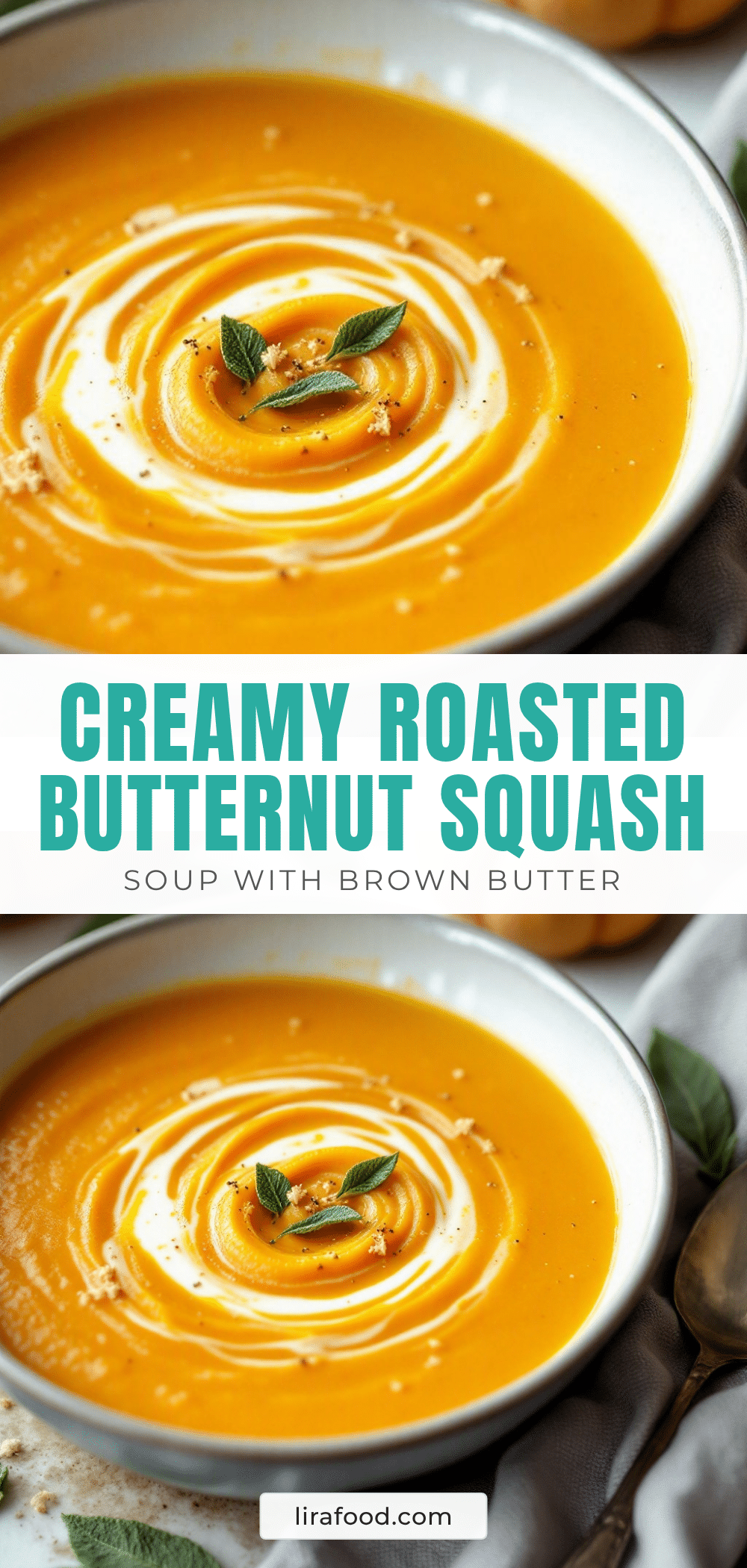
Cozy Roasted Butternut Squash Soup with Sage

A comforting, easy-to-make roasted butternut squash soup with sage and a hint of nutmeg. This recipe uses simple ingredients to create a velvety, nutrient-dense meal perfect for cozy fall nights.
- Prep Time: 15 minutes
- Cook Time: 45 minutes
- Total Time: 60 minutes
- Yield: 4 servings 1x
- Category: Main Course
- Cuisine: American
Ingredients
- 3 to 4 pounds butternut squash, peeled and cut into 1-inch cubes
- 1 medium yellow onion, diced
- 3 cloves garlic, minced
- 10 to 12 fresh sage leaves (or 1 tsp dried sage)
- 4 cups vegetable broth (low-sodium)
- 2 tablespoons butter (or olive oil for dairy-free)
- 1 tablespoon olive oil (for roasting)
- 1/2 cup heavy cream (or coconut milk for vegan)
- 1/2 teaspoon salt, plus more to taste
- 1/4 teaspoon black pepper, plus more to taste
- 1 pinch nutmeg
Instructions
- Preheat oven to 400°F (200°C). Line a large rimmed baking sheet with parchment paper.
- Toss the cubed butternut squash with 1 tablespoon olive oil, salt, and pepper. Spread them out on the baking sheet, ensuring they are not touching.
- Roast the squash for 25-30 minutes until edges are browned and caramelized and tender when pierced with a fork.
- While squash roasts, melt butter in a large pot or Dutch oven over medium heat.
- Add diced onion and cook for 5 minutes until soft and translucent.
- Add minced garlic and sage leaves; cook for 1 minute until fragrant.
- Add the roasted squash to the pot with the onions. Pour in vegetable broth and scrape up any brown bits from the bottom of the pot.
- Bring to a boil, then reduce heat to low. Cover and simmer for 10 minutes to meld flavors.
- Remove from heat and let cool for 5 minutes. Use an immersion blender to puree the soup until smooth.
- Stir in heavy cream and a pinch of nutmeg. Taste and adjust seasoning with salt and pepper as needed.
- Serve immediately, optionally garnished with a drizzle of cream or fresh sage.
Notes
Do not rush the roasting process; browning creates deep, nutty flavors. If using dried sage, toast it in a dry pan for 30 seconds before adding to the pot to wake up the oils. If the soup is too thick, add more broth; if too thin, simmer uncovered. For freezing, omit the cream and add it fresh upon reheating to prevent separation.
Nutrition
- Serving Size: 1 bowl
- Calories: 280
- Sugar: 8
- Sodium: 650
- Fat: 14
- Saturated Fat: 8
- Carbohydrates: 35
- Fiber: 6
- Protein: 4
Keywords: butternut squash soup, roasted squash, fall recipes, cozy soup, sage soup, vegetarian soup, gluten-free soup, easy dinner