Love this? Save it for later!
Share the inspiration with your friends
Introduction
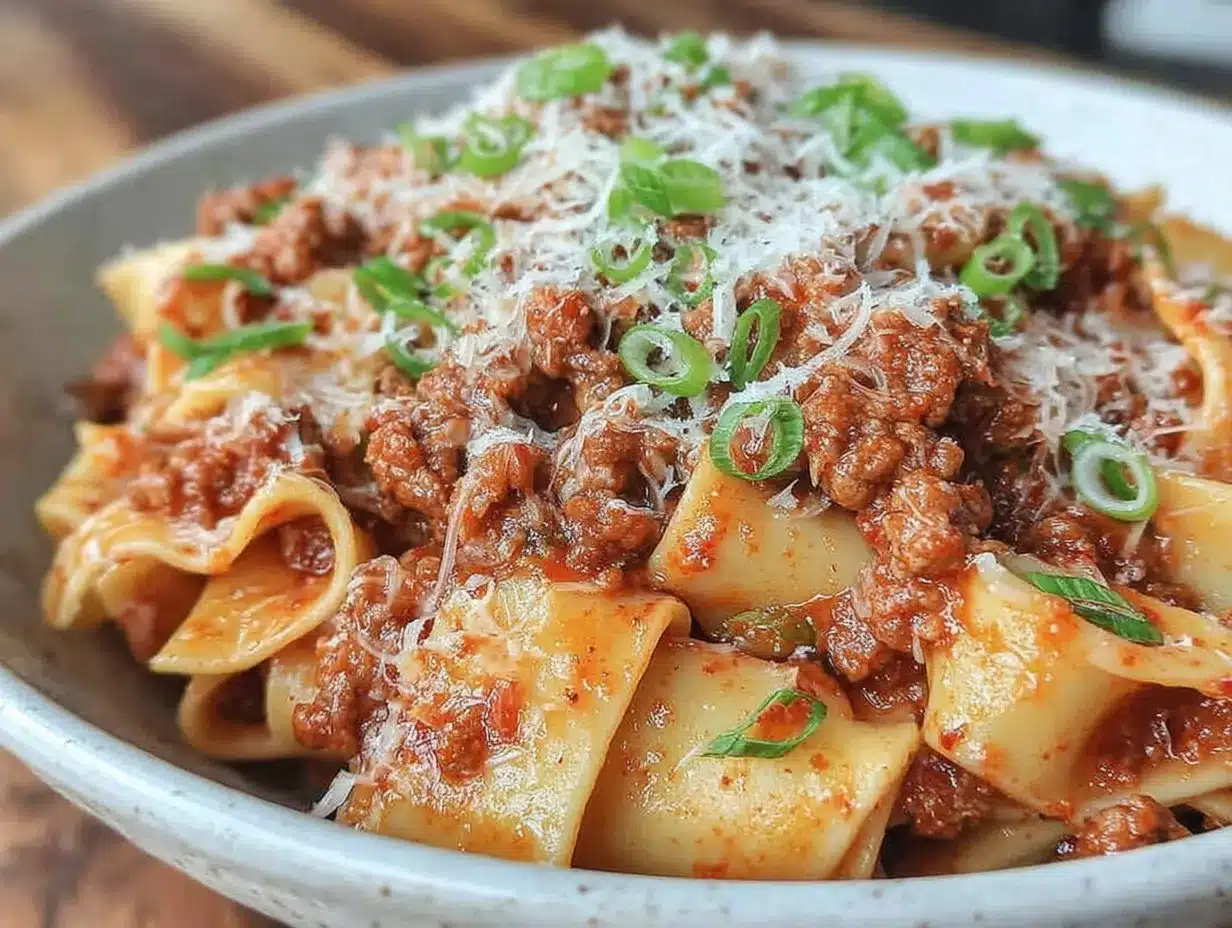
“The sizzle when the scallions hit the hot pan—that’s the sound that hooked me,” my friend Mina said, grinning as she tossed the crispy green ribbons atop a steaming plate of pappardelle. It was a chilly Friday evening in late October, and honestly, I wasn’t expecting much when she invited me over for a casual dinner. But the moment I took a bite of her flavorful gochujang bolognese on wide pappardelle with crispy scallions, I knew this wasn’t your everyday pasta dish.
It started as an experiment, really. Mina had been wanting to marry her love of Italian pasta with the fiery, umami-packed punch of Korean flavors. One night, rummaging through her fridge, she paired a jar of gochujang—Korean chili paste—with traditional Bolognese ingredients. The result? A harmonious sauce that was spicy, savory, and downright addictive. I remember watching her balance the heat of the gochujang with a splash of cream and a touch of soy sauce, all while chatting about how sometimes the best recipes come from just throwing things together and seeing what sticks.
Maybe you’ve been there, staring at your pantry, unsure how to make dinner exciting without spending hours in the kitchen. This recipe is that perfect answer: bold flavors, quick prep, and a little crispy scallion magic on top to make it sing. I forgot to set a timer while we cooked, which meant the scallions got extra crispy, and honestly, that accidental crunch was the best part. That night stuck with me, and ever since, I keep coming back to this dish whenever I want something comforting with a kick.
Why You’ll Love This Recipe
After testing this gochujang bolognese on wide pappardelle multiple times, I’m confident it’s one of the most satisfying pasta dishes you can whip up without a fuss. Here’s why it’s become a staple in my kitchen:
- Quick & Easy: Ready in just about 30 minutes, it’s perfect for those busy weeknights when you need dinner on the table fast.
- Simple Ingredients: No need to hunt down anything exotic—most are pantry staples with a Korean twist.
- Perfect for Impressing: Whether it’s a cozy dinner or a casual potluck, this dish looks and tastes like you spent hours perfecting it.
- Crowd-Pleaser: The spicy-sweet depth of the gochujang sauce wins over both adventurous eaters and traditional pasta lovers.
- Unbelievably Delicious: The wide pappardelle noodles hold onto the sauce beautifully, and those crispy scallions add a satisfying crunch and fresh brightness.
What makes this recipe stand out is the clever fusion of Korean and Italian flavors. The gochujang adds a smoky heat that’s balanced by the richness of the meat and a dash of savory soy sauce, creating a sauce that’s layered, complex, but not overwhelming. Honestly, it’s comfort food reimagined but with a punch that’ll keep you coming back for more.
What Ingredients You Will Need
This recipe uses simple, wholesome ingredients to bring bold flavor and satisfying texture without fuss. Most items are easy to find, and substitutions are straightforward if you need to adapt.
- For the Gochujang Bolognese Sauce:
- 1 lb (450g) ground beef or ground pork (for a richer flavor, try a mix)
- 2 tbsp vegetable oil (for sautéing)
- 1 medium onion, finely chopped
- 3 cloves garlic, minced
- 1 tbsp ginger, grated (adds warmth and depth)
- 2 tbsp gochujang (Korean chili paste) – I recommend Chung Jung One for authentic flavor
- 2 tbsp tomato paste (for richness and color)
- 1/2 cup crushed tomatoes or canned tomato sauce
- 1 tbsp soy sauce (balances the sweetness and adds umami)
- 1 tsp sugar or honey (to mellow heat)
- 1/4 cup heavy cream or coconut cream (optional, for mellow creaminess)
- Salt and pepper, to taste
- For the Pasta & Toppings:
- 12 oz (340g) wide pappardelle pasta
- 4 scallions (green onions), thinly sliced on the diagonal
- Vegetable oil for frying scallions
- Freshly grated Parmesan cheese (optional but highly recommended)
- Fresh basil or parsley for garnish (optional)
If you want to make this gluten-free, swap the pappardelle for gluten-free wide noodles or even rice noodles. For a vegetarian version, try textured vegetable protein or finely chopped mushrooms in place of the meat.
Equipment Needed
- A large skillet or sauté pan – I like using a heavy-bottomed one to evenly brown the meat without sticking.
- Large pot for boiling pasta – a wide pot helps prevent sticking.
- Slotted spoon or spider strainer – handy for lifting the crispy scallions out of the oil without excess grease.
- Fine mesh strainer or colander for draining pasta.
- Wooden spoon or silicone spatula for stirring the sauce.
- Optional: Food thermometer if you want to check the meat’s doneness precisely.
For the crispy scallions, I’ve found a small cast-iron skillet works wonders because it holds heat evenly and helps get that perfect crunch. If you don’t have one, any non-stick pan will do – just watch the heat closely so the scallions don’t burn. Bonus tip: keep your oil temperature steady by heating it slowly rather than cranking it to high right away.
Preparation Method
- Prep the ingredients: Finely chop the onion, mince garlic, grate ginger, and slice scallions diagonally into thin strips. Set aside. Bring a large pot of salted water to a boil for the pasta.
- Cook the meat: Heat 2 tablespoons of vegetable oil in your skillet over medium-high heat. Add the ground beef (or pork) and cook, breaking it up with a wooden spoon, until browned and no longer pink, about 6-8 minutes. Season lightly with salt and pepper. Remove the meat from pan and set aside, leaving the fat in the pan.
- Sauté aromatics: Lower heat to medium. Add the chopped onion to the pan and cook for 4-5 minutes until translucent and soft. Stir in the garlic and ginger and cook for another 1-2 minutes until fragrant, but don’t let them brown.
- Build the sauce: Stir in the gochujang and tomato paste, cooking for 1-2 minutes to toast the pastes and deepen flavor. Return the browned meat to the pan, stir well to combine.
- Add liquids: Pour in the crushed tomatoes, soy sauce, and sugar/honey. Stir to combine and bring to a gentle simmer. Reduce heat to low, partially cover, and let the sauce cook for 15 minutes, stirring occasionally. This helps the flavors meld beautifully.
- Cook the pasta: While the sauce simmers, add the pappardelle to the boiling water and cook according to package instructions (usually 8-10 minutes) until al dente. Reserve 1/2 cup of pasta water before draining.
- Fry the scallions: Heat about 1/4 inch of vegetable oil in a small skillet over medium-high heat. When hot, add scallion slices in batches, frying until crisp and golden, about 30-60 seconds. Remove with a slotted spoon and drain on paper towels. Watch carefully—they burn fast!
- Finish the sauce: Stir the cream into the sauce if using, then adjust seasoning with salt and pepper. If the sauce feels too thick, add a splash of reserved pasta water to loosen it up.
- Toss pasta with sauce: Return drained pasta to the large pot or a warm serving bowl. Pour sauce over and toss gently to coat every ribbon of pappardelle.
- Serve: Plate the pasta and generously top with crispy scallions and freshly grated Parmesan. Garnish with fresh herbs if desired. Serve immediately and enjoy!
Cooking Tips & Techniques
Here are some tips I learned the hard way while perfecting this recipe:
- Don’t rush browning the meat. Getting that deep brown crust adds serious flavor to the sauce. Avoid stirring too often—let the meat sit for a bit to develop color.
- Control the heat for scallions. I once let the oil get too hot and burned the scallions in seconds. Medium-high heat is best to get a crisp texture without bitter burnt taste.
- Reserve pasta water. It’s liquid gold for adjusting sauce consistency and helps the sauce cling to noodles better thanks to its starch content.
- Adjust gochujang level. Some brands are spicier than others. Start with less if you’re unsure, then add more to taste at the end.
- Multitask smartly. While the sauce simmers, cook pasta and fry scallions simultaneously to save time and keep everything hot and fresh.
- Use fresh ingredients. Fresh garlic, ginger, and scallions make a noticeable difference in the final flavor.
Variations & Adaptations
- Vegetarian Version: Swap ground meat for finely chopped mushrooms, lentils, or plant-based crumbles. Add a splash of soy sauce to boost umami.
- Spice Level: For a milder sauce, reduce gochujang or add extra cream. For extra heat, add a pinch of crushed red pepper flakes or a drizzle of chili oil on top.
- Seasonal Twist: In summer, mix in roasted cherry tomatoes or fresh basil to brighten the sauce. In winter, add a handful of baby spinach or kale for extra greens.
- Alternative Noodles: Try wide rice noodles or even fresh egg noodles for a different texture and gluten-free option.
- Personal Favorite: I love stirring in a splash of toasted sesame oil at the very end for a subtle nutty aroma that pairs beautifully with the scallions.
Serving & Storage Suggestions
Serve this gochujang bolognese on wide pappardelle hot, ideally fresh from the stove to enjoy that perfect balance of the creamy, spicy sauce and crisp scallions. Garnishing with freshly grated Parmesan adds a salty richness that rounds out the flavors. A simple side salad with a light vinaigrette or steamed greens pairs nicely.
For storage, keep leftovers in an airtight container in the refrigerator for up to 3 days. When reheating, add a splash of water or cream and warm gently on the stove or microwave to bring back the sauce’s creamy texture. The crispy scallions lose their crunch after reheating, so I recommend frying fresh ones to top your leftovers.
Flavors tend to deepen overnight, so this pasta actually tastes great the next day—just remember that the scallions are best fresh.
Nutritional Information & Benefits
This dish packs a flavorful punch while offering a balanced nutritional profile. Each serving provides a good source of protein from the ground meat, along with vitamins and antioxidants from garlic, onions, and scallions. Gochujang, made from fermented chili paste, contains probiotics which can aid digestion and add a unique umami flavor.
Using lean ground meat or plant-based alternatives can reduce saturated fat content. The wide pappardelle noodles offer carbs for energy, and adding vegetables or fresh herbs boosts fiber and micronutrients. For those watching gluten, swapping noodles for gluten-free options works well without compromising taste.
Overall, this recipe fits nicely into a wholesome, satisfying meal that’s both comforting and nourishing.
Conclusion
This flavorful gochujang bolognese on wide pappardelle with crispy scallions isn’t just pasta—it’s a celebration of bold flavors and textures that surprise and satisfy. Whether you’re cooking for yourself, friends, or family, this recipe adapts to your tastes and skill level, making it a versatile go-to.
I love how this dish brings together the comforting heartiness of classic Bolognese with the exciting heat and depth of Korean gochujang. It’s become one of those recipes I turn to when I want something quick but memorable. Honestly, it’s hard not to smile with every bite.
Give it a try, tweak it to your liking, and let me know how you make it your own. Your kitchen might just become the new hotspot for a fusion feast!
FAQs
What is gochujang and where can I buy it?
Gochujang is a Korean fermented chili paste known for its spicy, sweet, and savory flavor. You can find it in most Asian grocery stores or online. Brands like Chung Jung One or CJ are reliable choices.
Can I make this recipe ahead of time?
Yes! The sauce can be made a day in advance and reheated gently. Just fry fresh scallions before serving to keep the crunch.
What noodles work best with this sauce?
Wide noodles like pappardelle are ideal because they hold the thick, rich sauce well. You can also use fettuccine, tagliatelle, or gluten-free wide noodles.
How spicy is this recipe?
The spice level depends on the amount and brand of gochujang used. It has a moderate heat with a sweet undertone—adjust to your taste by adding more or less.
Can I freeze leftovers?
Yes, you can freeze the sauce separately (without scallions) for up to 2 months. Thaw overnight in the fridge and reheat gently. Avoid freezing the pasta as it may become mushy.
Pin This Recipe!
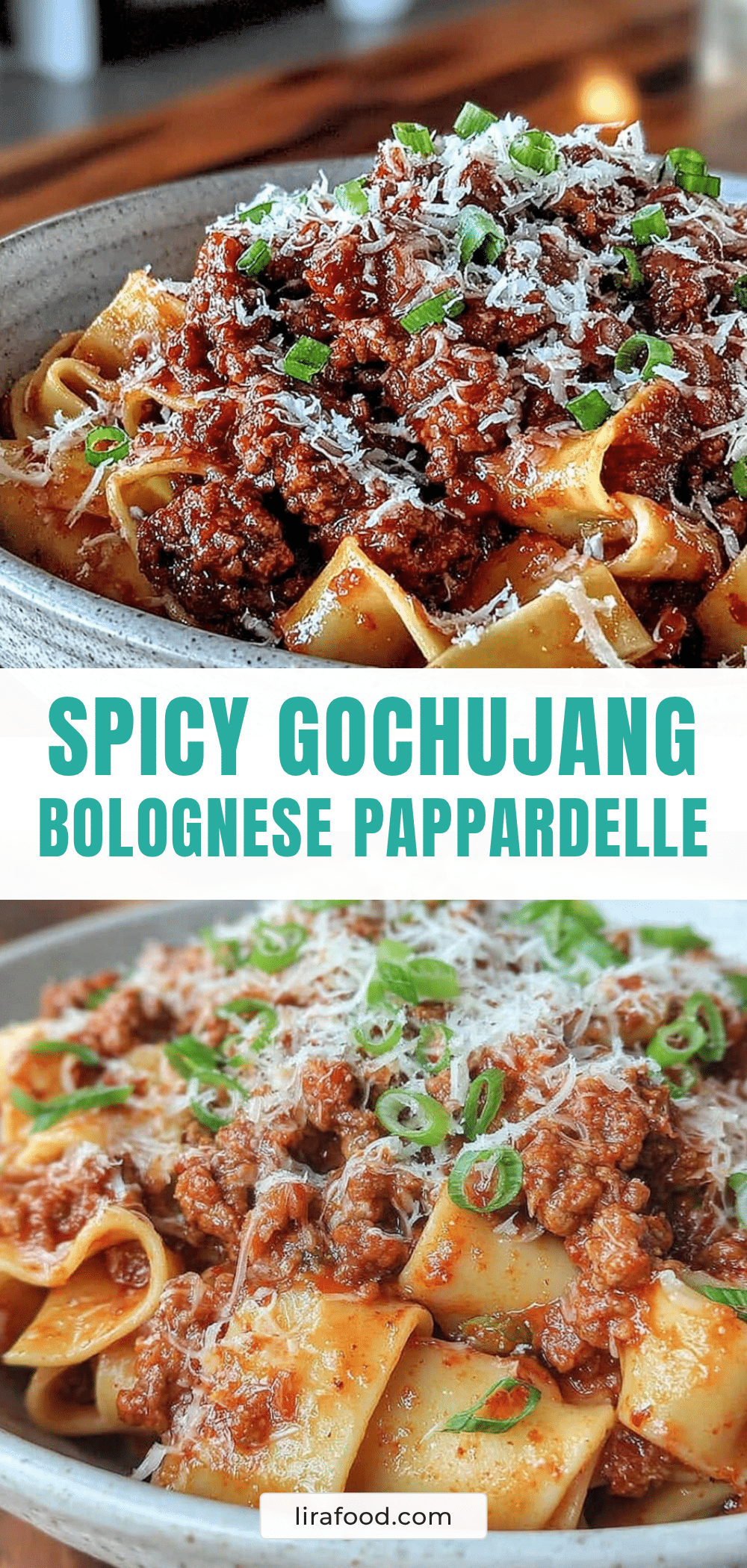
Flavorful Gochujang Bolognese Recipe on Wide Pappardelle with Crispy Scallions
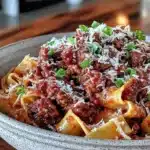
A bold fusion of Korean and Italian flavors, this gochujang bolognese on wide pappardelle is spicy, savory, and topped with crispy scallions for a satisfying crunch.
- Prep Time: 15 minutes
- Cook Time: 30 minutes
- Total Time: 45 minutes
- Yield: 4 servings 1x
- Category: Main Course
- Cuisine: Fusion (Korean-Italian)
Ingredients
- 1 lb ground beef or ground pork (or mix for richer flavor)
- 2 tbsp vegetable oil (for sautéing)
- 1 medium onion, finely chopped
- 3 cloves garlic, minced
- 1 tbsp ginger, grated
- 2 tbsp gochujang (Korean chili paste)
- 2 tbsp tomato paste
- 1/2 cup crushed tomatoes or canned tomato sauce
- 1 tbsp soy sauce
- 1 tsp sugar or honey
- 1/4 cup heavy cream or coconut cream (optional)
- Salt and pepper, to taste
- 12 oz wide pappardelle pasta
- 4 scallions (green onions), thinly sliced on the diagonal
- Vegetable oil for frying scallions
- Freshly grated Parmesan cheese (optional)
- Fresh basil or parsley for garnish (optional)
Instructions
- Finely chop the onion, mince garlic, grate ginger, and slice scallions diagonally into thin strips. Bring a large pot of salted water to a boil for the pasta.
- Heat 2 tablespoons of vegetable oil in a skillet over medium-high heat. Add ground beef or pork and cook, breaking it up, until browned and no longer pink, about 6-8 minutes. Season with salt and pepper. Remove meat and set aside, leaving fat in pan.
- Lower heat to medium. Add chopped onion and cook 4-5 minutes until translucent. Stir in garlic and ginger and cook 1-2 minutes until fragrant, avoiding browning.
- Stir in gochujang and tomato paste, cooking 1-2 minutes to toast and deepen flavor. Return browned meat to pan and combine well.
- Add crushed tomatoes, soy sauce, and sugar or honey. Stir and bring to gentle simmer. Reduce heat to low, partially cover, and cook sauce for 15 minutes, stirring occasionally.
- Cook pappardelle in boiling salted water according to package instructions (8-10 minutes) until al dente. Reserve 1/2 cup pasta water before draining.
- Heat about 1/4 inch vegetable oil in a small skillet over medium-high heat. Fry scallion slices in batches until crisp and golden, about 30-60 seconds. Remove with slotted spoon and drain on paper towels.
- Stir cream into sauce if using. Adjust seasoning with salt and pepper. Add reserved pasta water if sauce is too thick.
- Return drained pasta to pot or serving bowl. Pour sauce over and toss gently to coat.
- Plate pasta and top generously with crispy scallions and freshly grated Parmesan. Garnish with fresh herbs if desired. Serve immediately.
Notes
Do not rush browning the meat to develop deep flavor. Control oil temperature carefully when frying scallions to avoid burning. Reserve pasta water to adjust sauce consistency. Adjust gochujang amount to taste for spice level. Fry scallions fresh when reheating leftovers for best crunch.
Nutrition
- Serving Size: 1 serving (about 1/4
- Calories: 550
- Sugar: 6
- Sodium: 700
- Fat: 28
- Saturated Fat: 9
- Carbohydrates: 45
- Fiber: 4
- Protein: 30
Keywords: gochujang bolognese, pappardelle, Korean chili paste, fusion pasta, crispy scallions, easy pasta recipe, spicy pasta, weeknight dinner